Building a Future-Ready Foundation for Digital Storytelling
DTCC partnered with Verndale to redesign and rebuild its annual report as a fully integrated experience inside Optimizely rather than continuing to produce it externally outside the core CMS.
This work was not just a one-year design exercise. It combined UX strategy, visual design, motion, CMS authoring, accessibility, SEO, and modular engineering to create a more reusable foundation for future annual report cycles.
The Challenge
DTCC’s existing annual report process carried a heavy production burden. The report was being built outside the native CMS, which limited reuse and made each cycle more manual than it needed to be.
The experience also needed to balance multiple priorities at once: high editorial polish, brand alignment, accessibility, stakeholder review complexity, and a launch timeline tied to legal and audit-driven approvals.
From a UX and product standpoint, the challenge was to create a bespoke, high-touch experience without turning it into a one-off build that DTCC would have to reinvent every year.
Our Approach
Move the annual report into DTCC’s core digital ecosystem
1
Verndale approached the work as a platform and product problem, not just a design refresh. The annual report was rebuilt within Optimizely so DTCC could manage it natively and establish a more repeatable process for future reporting cycles.
Design a bespoke experience on top of a reusable system
2
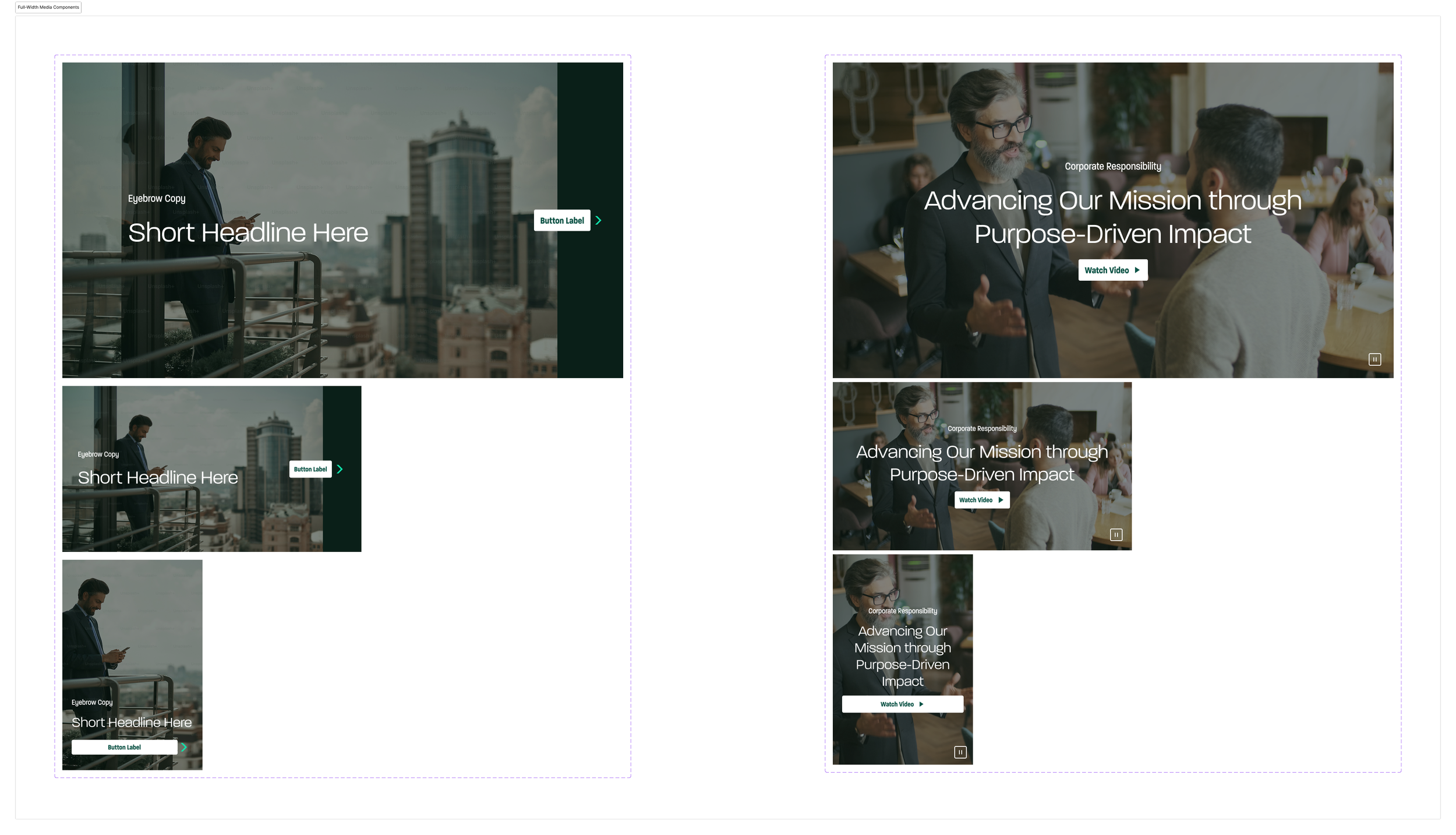
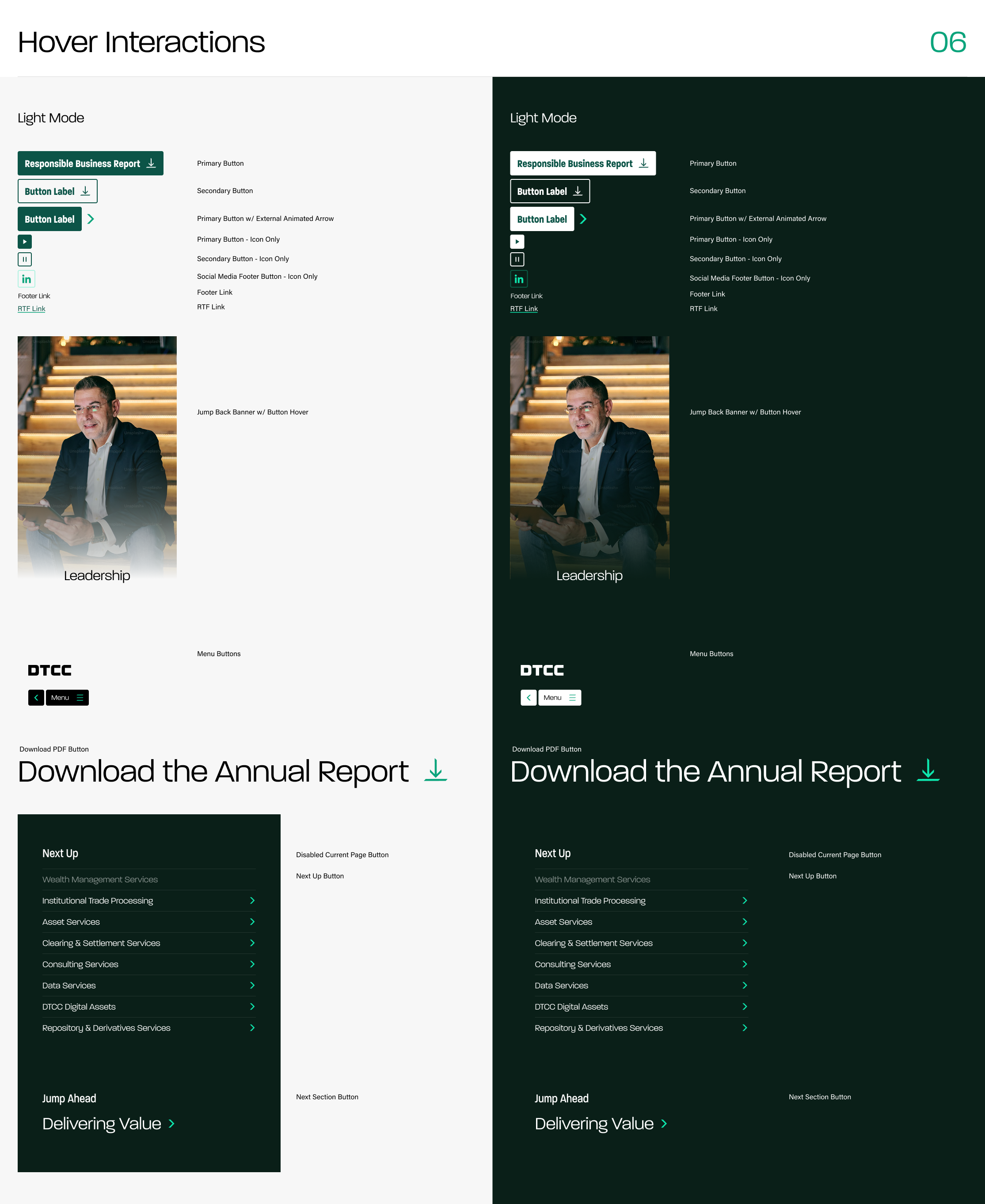
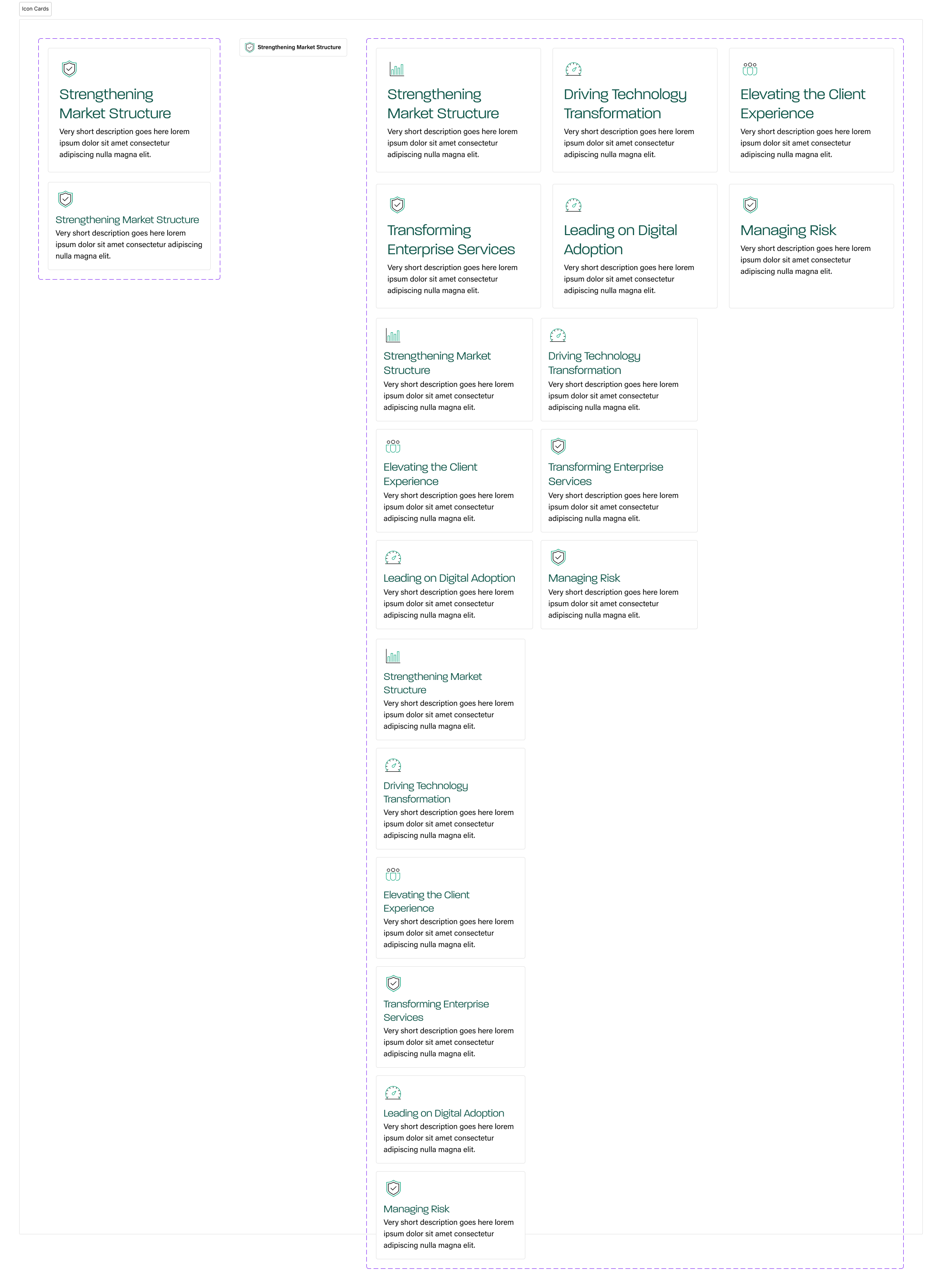
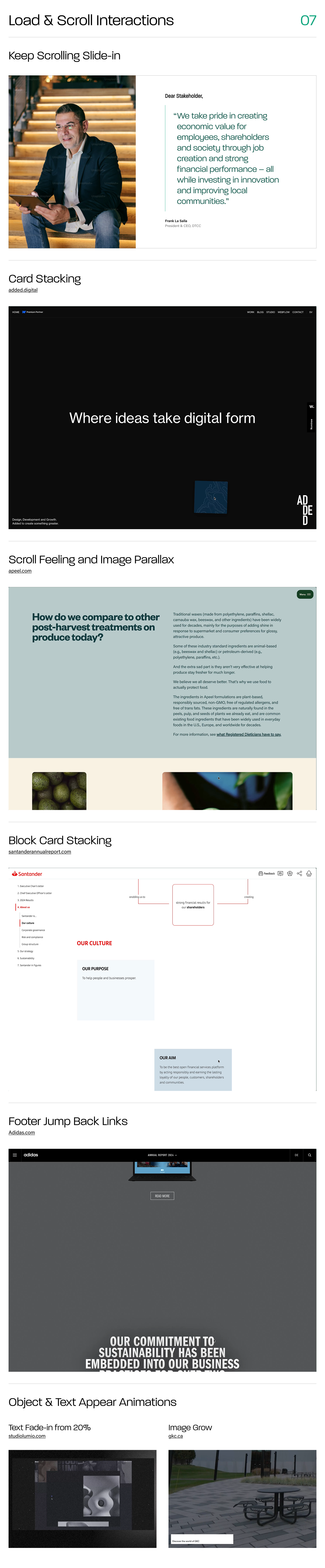
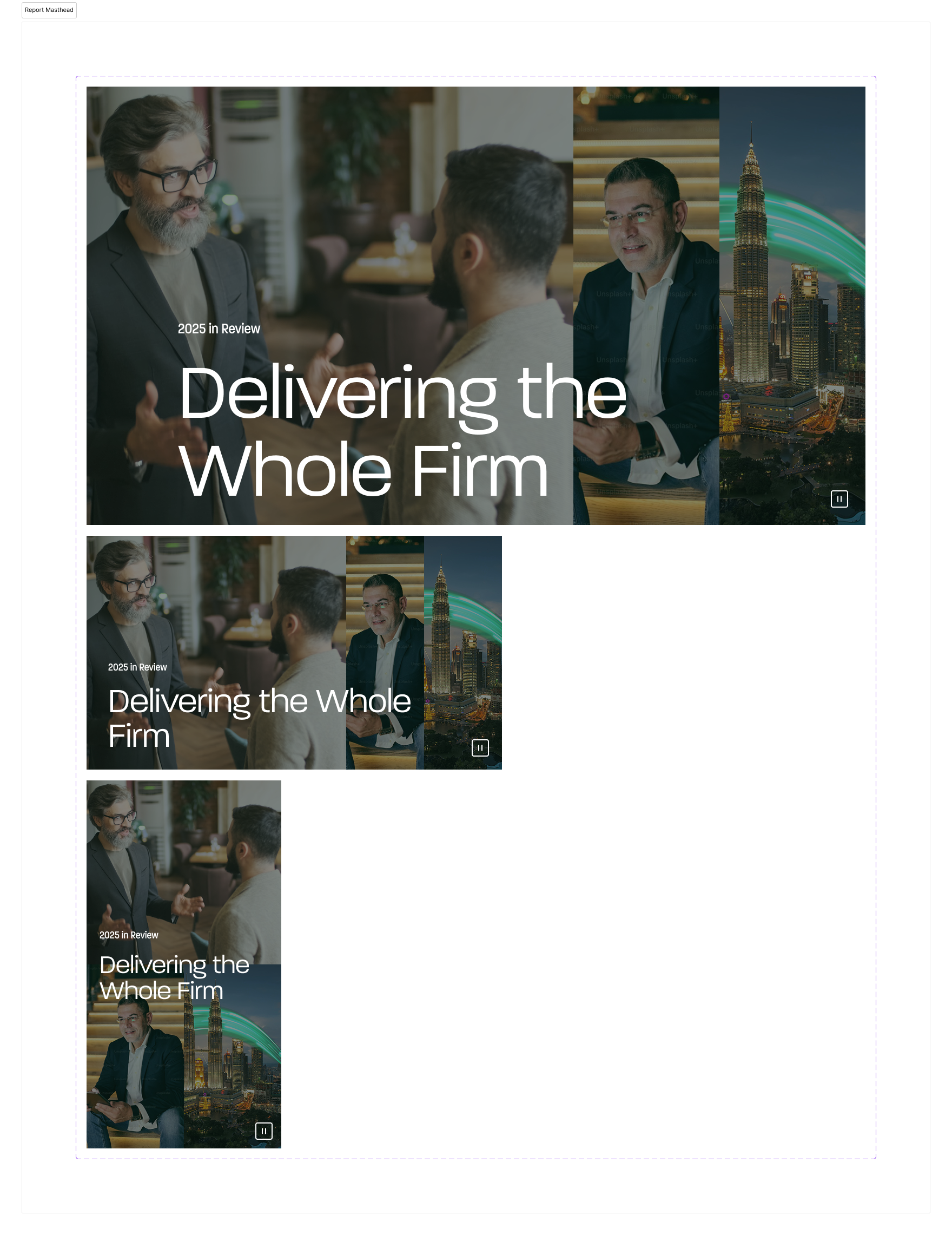
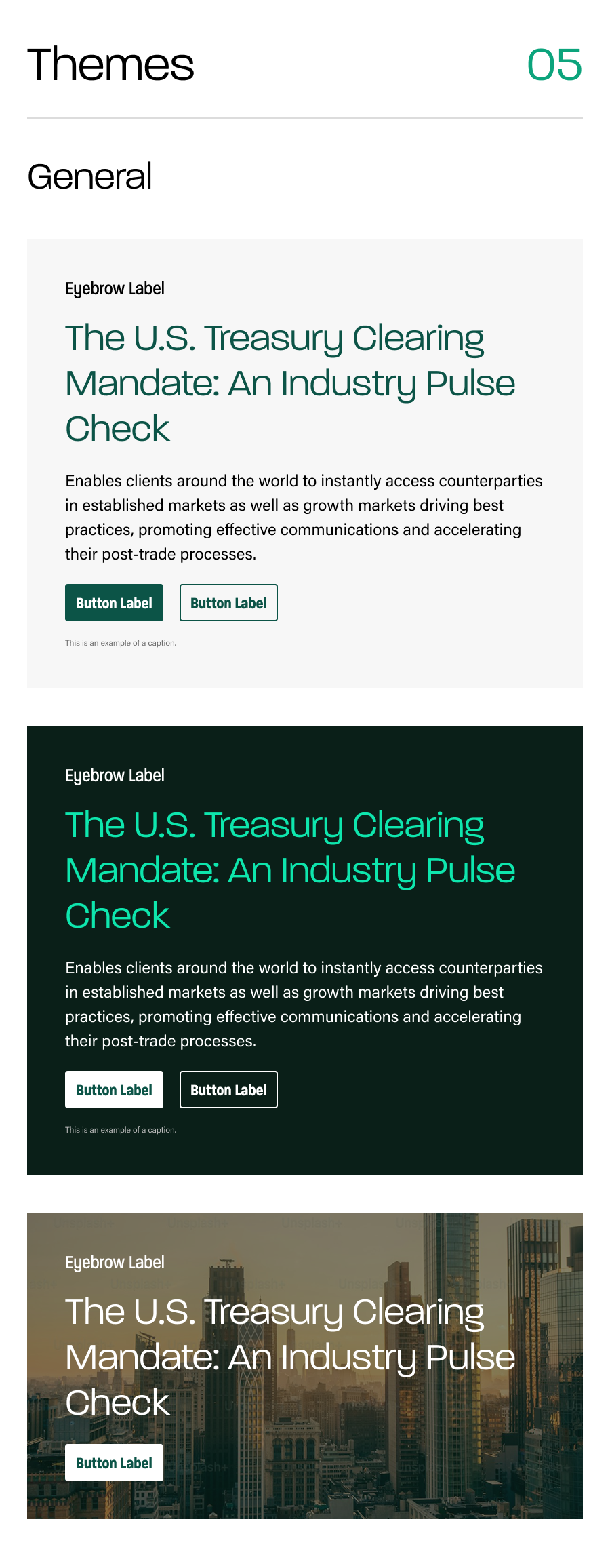
The report was intentionally crafted to feel immersive and editorial, with custom visual design, animation direction, and a unique annual-report navigation model. At the same time, the implementation was structured around reusable components and content-managed page building rather than hard-coded one-off templates.
Make authorship more flexible without losing design integrity
3
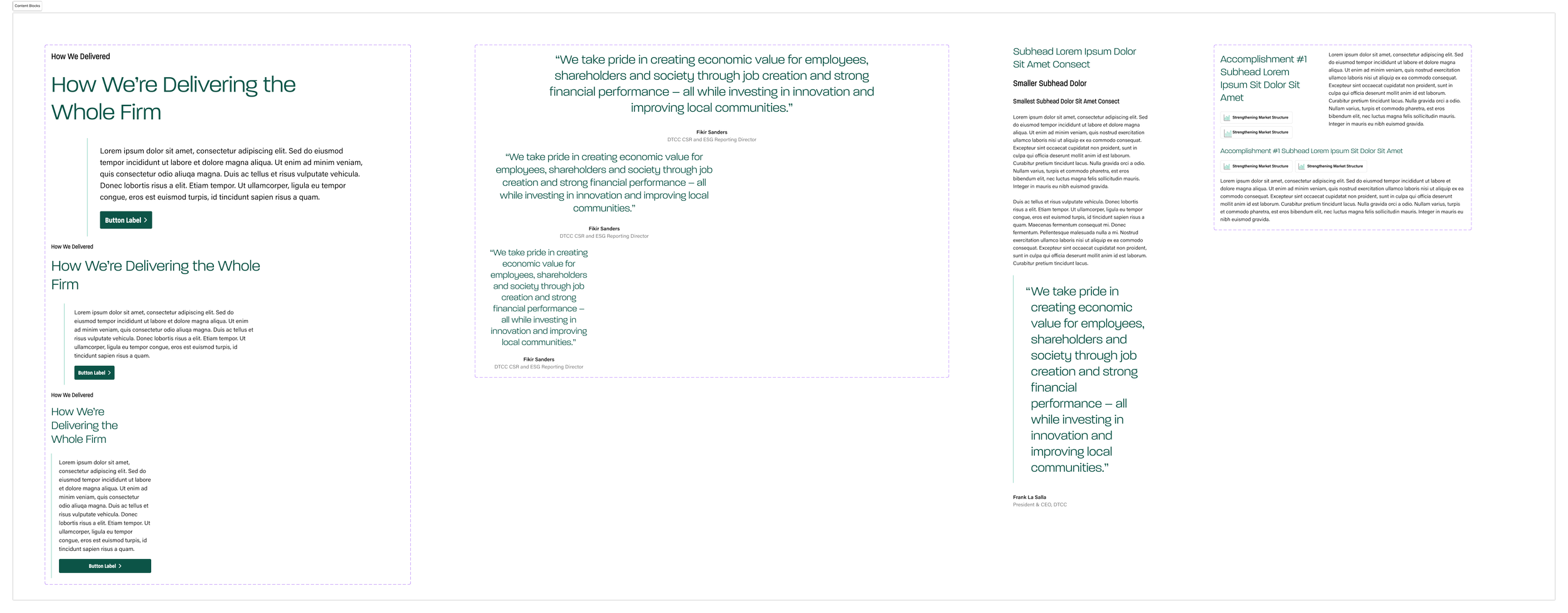
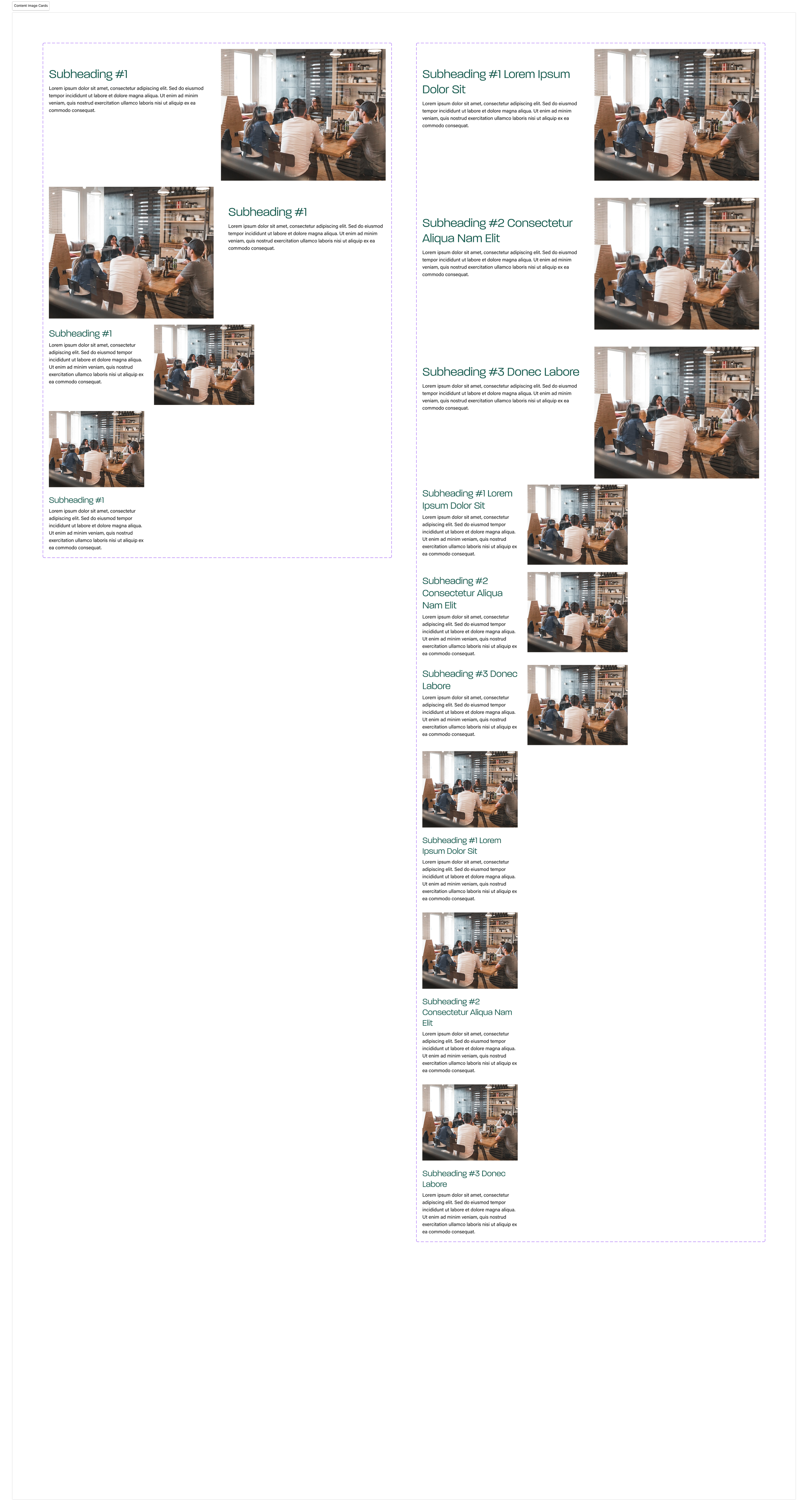
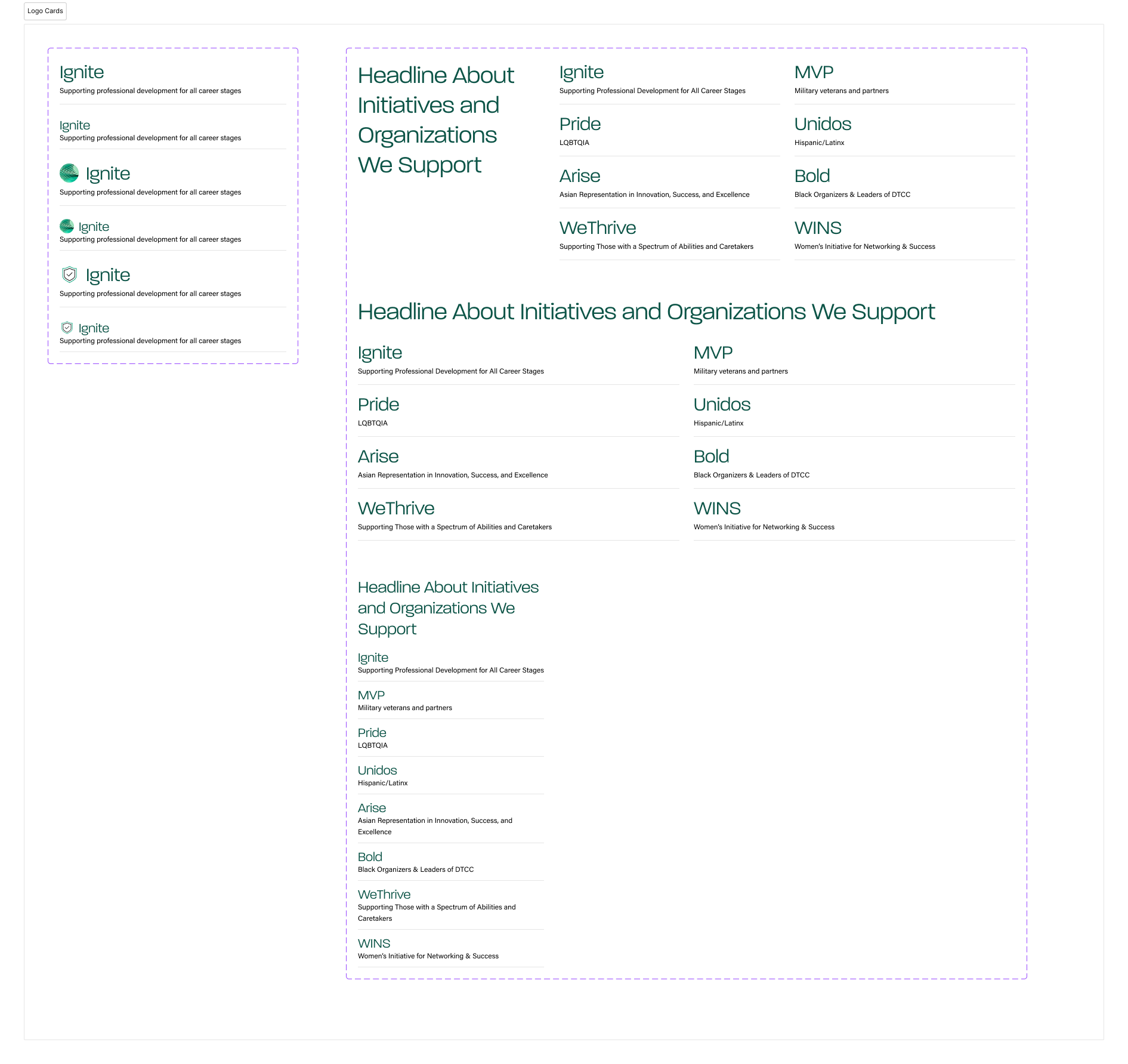
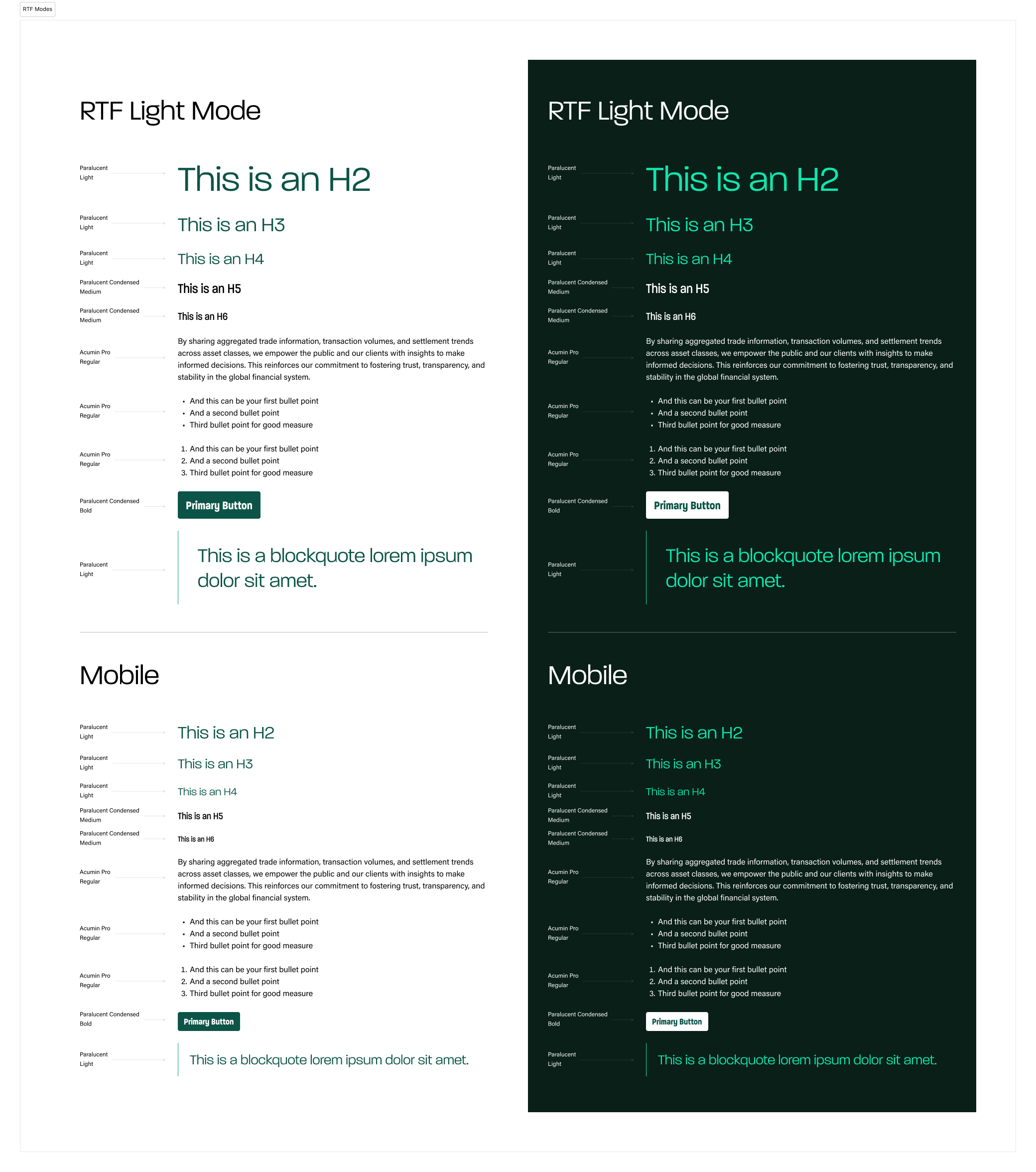
A central goal was to enable content authors to create annual report pages using DTCC’s General Page framework, combining section blocks, sub-section blocks, and content blocks inside a controlled system.
This let DTCC gain flexibility for future reporting cycles while still preserving the visual structure and interaction patterns required by the design.
Treat launch quality as part of the product
4
The build was supported by structured functional documentation, sprint demos, QA, content-author training, accessibility review, schema documentation, SEO validation, and coordinated go-live planning.
Building the Foundations for Better Products
DTCC Annual Report is a strong example of the team bringing UX, editorial design, and technical systems thinking together in a high-review, high-precision corporate environment. The work was not just about producing a polished 2025 report. It was about creating a more scalable annual-report model inside DTCC’s own platform, improving authoring flexibility, and building a repeatable foundation that can support future storytelling, compliance needs, and launch efficiency.
-
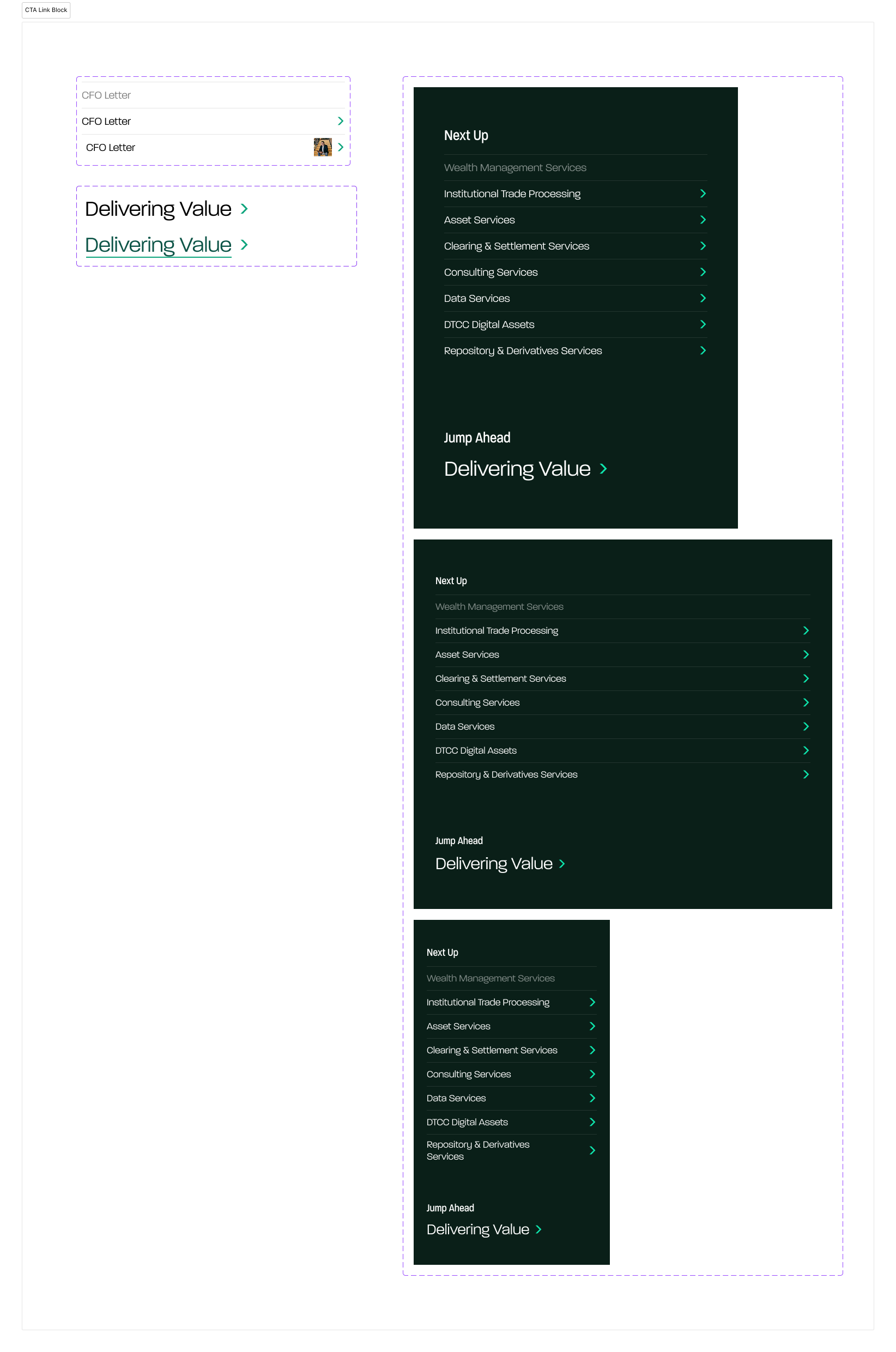
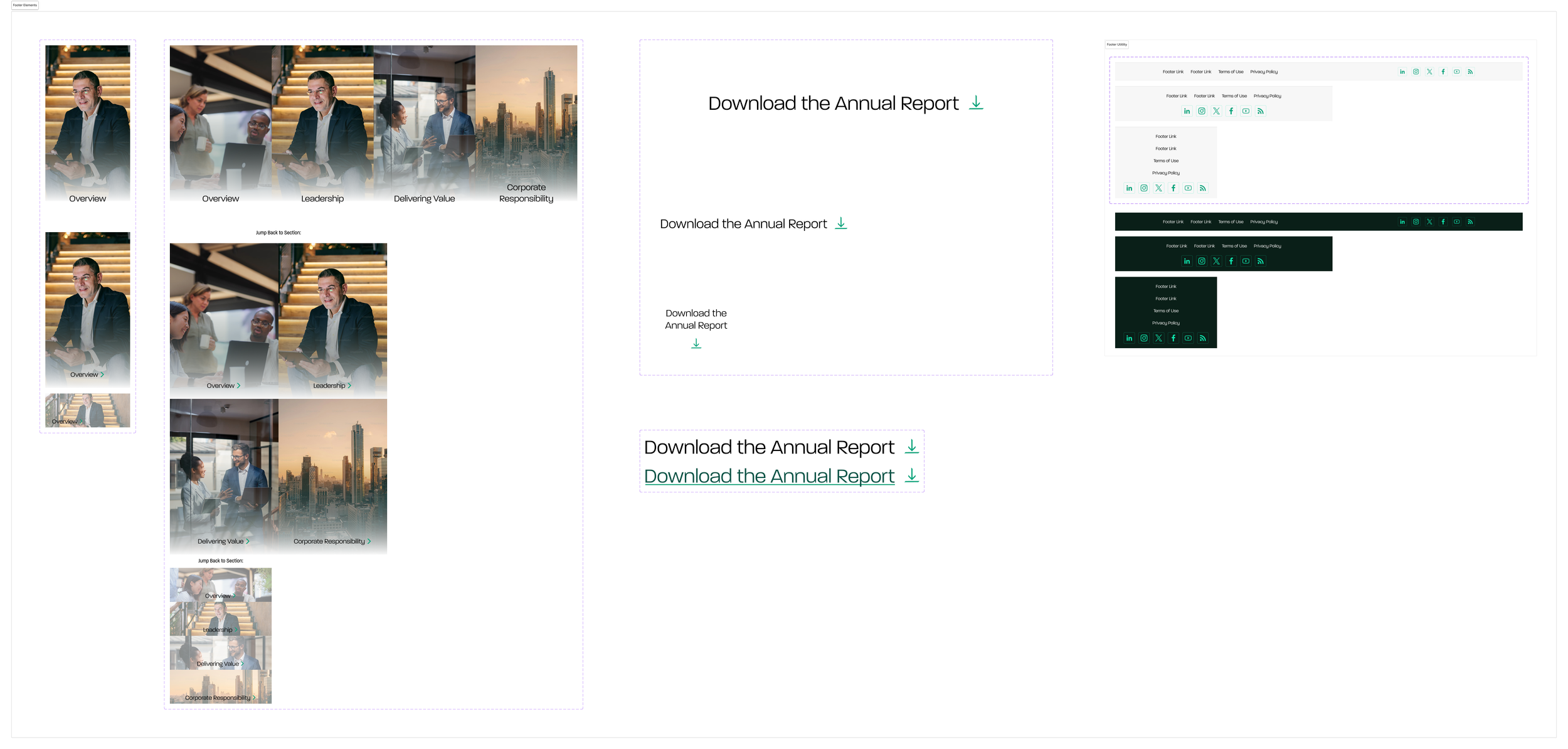
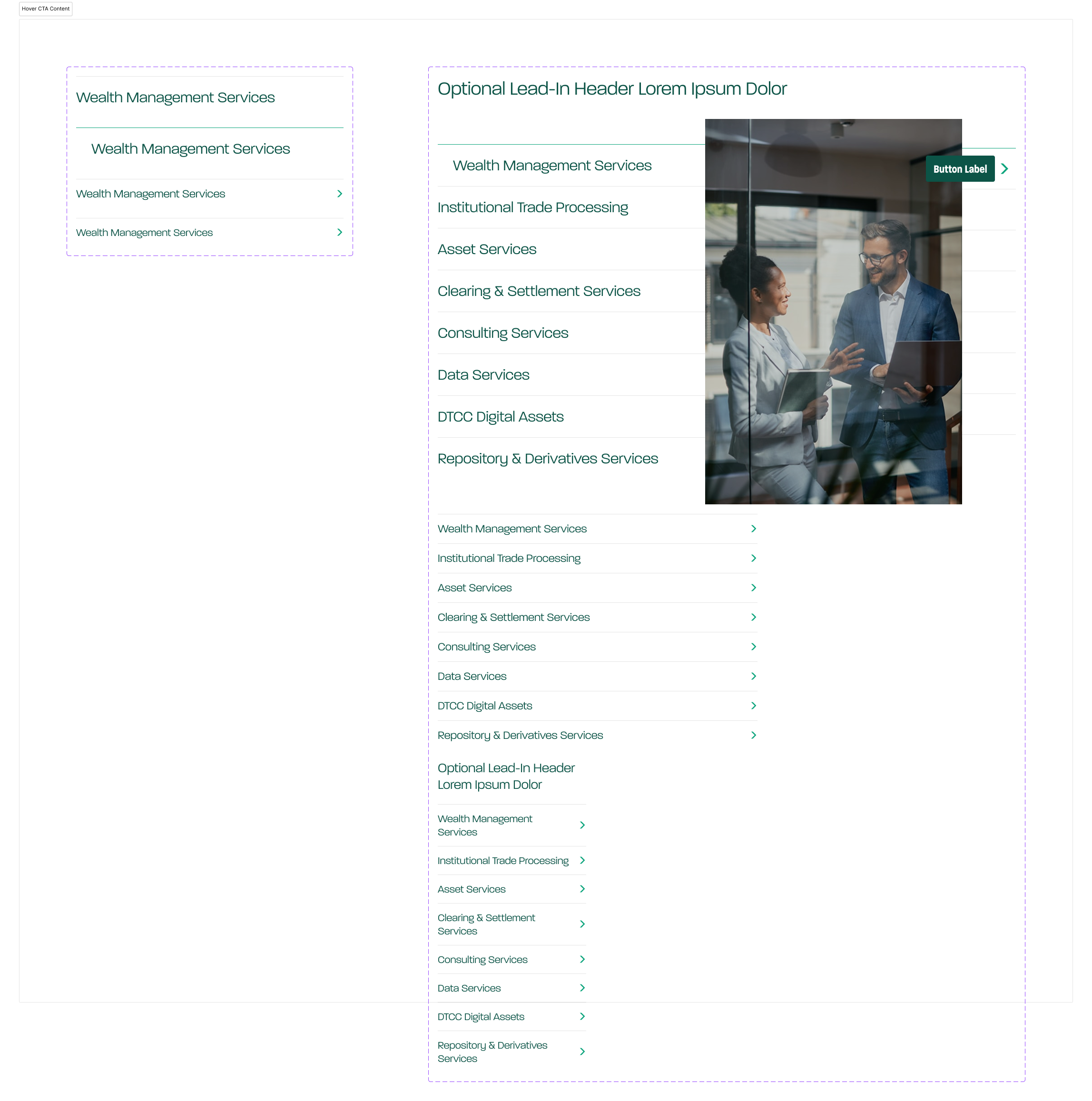
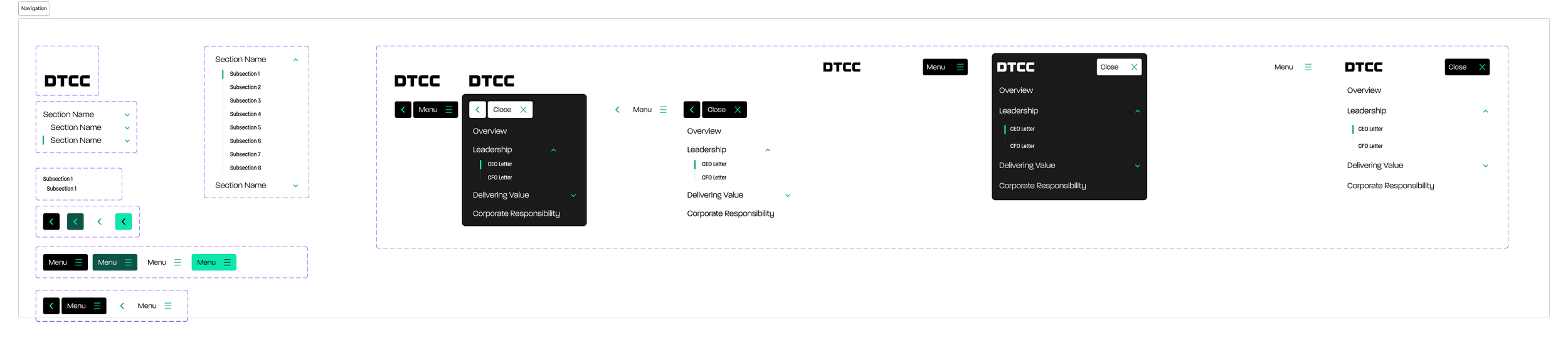
The annual report used a dedicated primary navigation system rather than the standard DTCC site header, giving the experience a more focused and immersive long-form structure.
Navigation was designed to support both top-level sections and nested sub-sections, helping users move through a dense report without losing context.
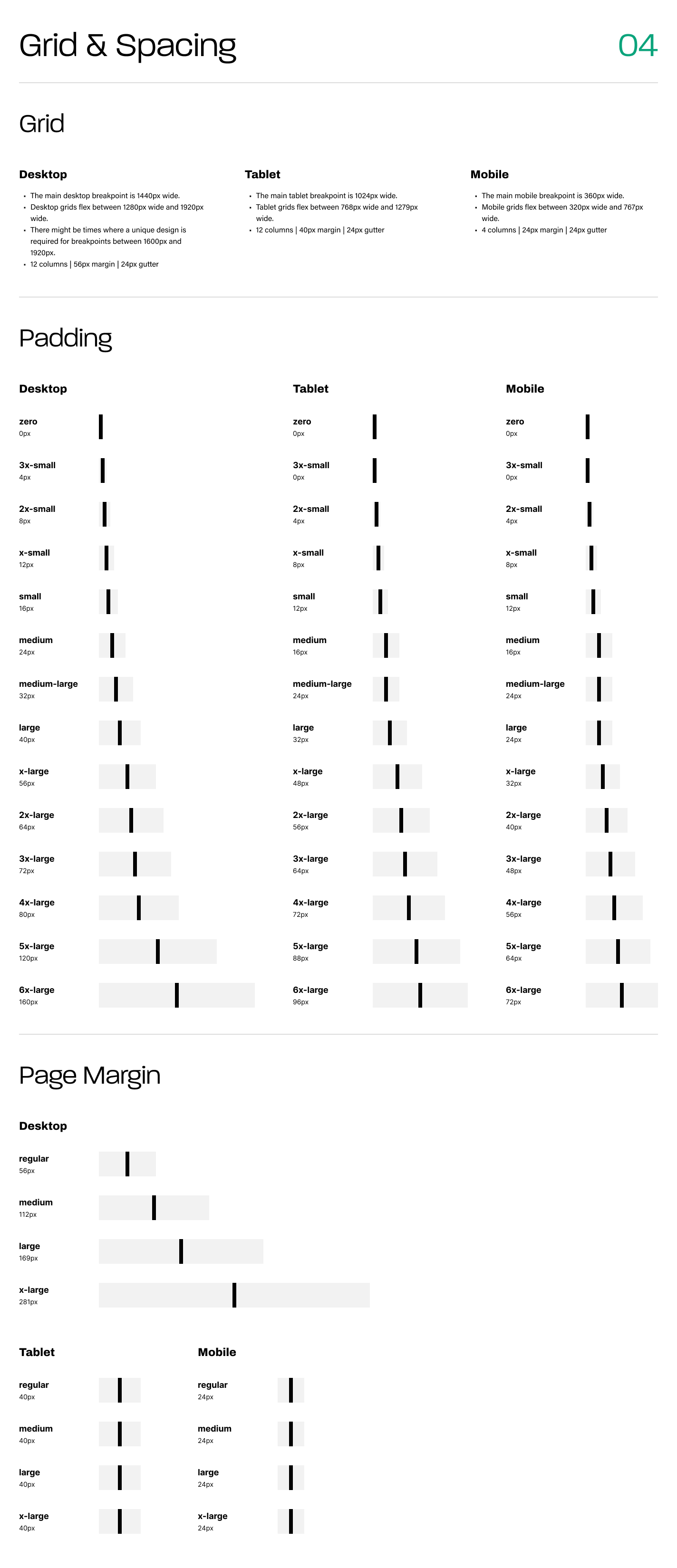
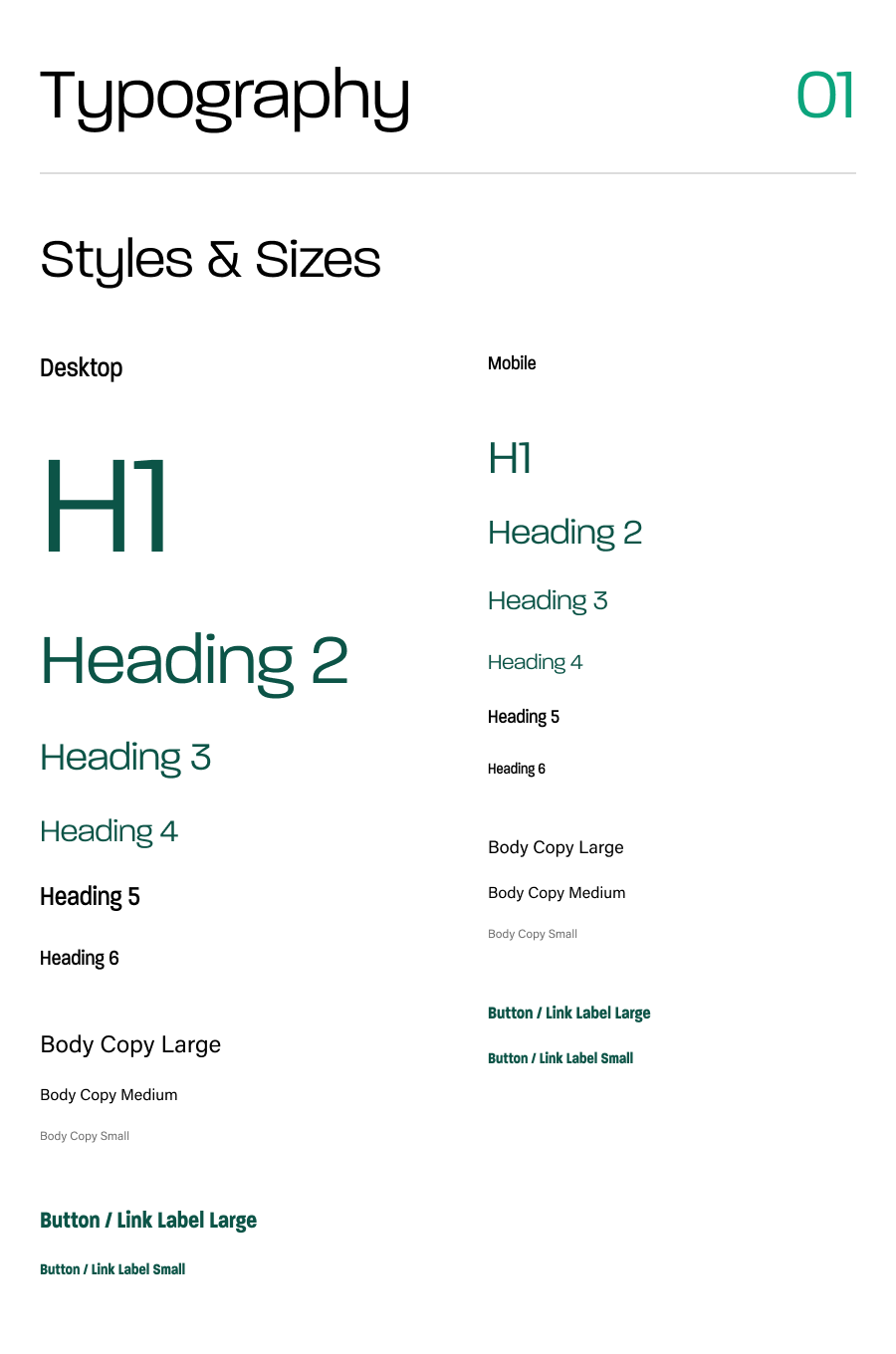
Visual design included desktop and mobile layouts for the full report, plus mood-board exploration and animation execution to shape a more engaging editorial experience.
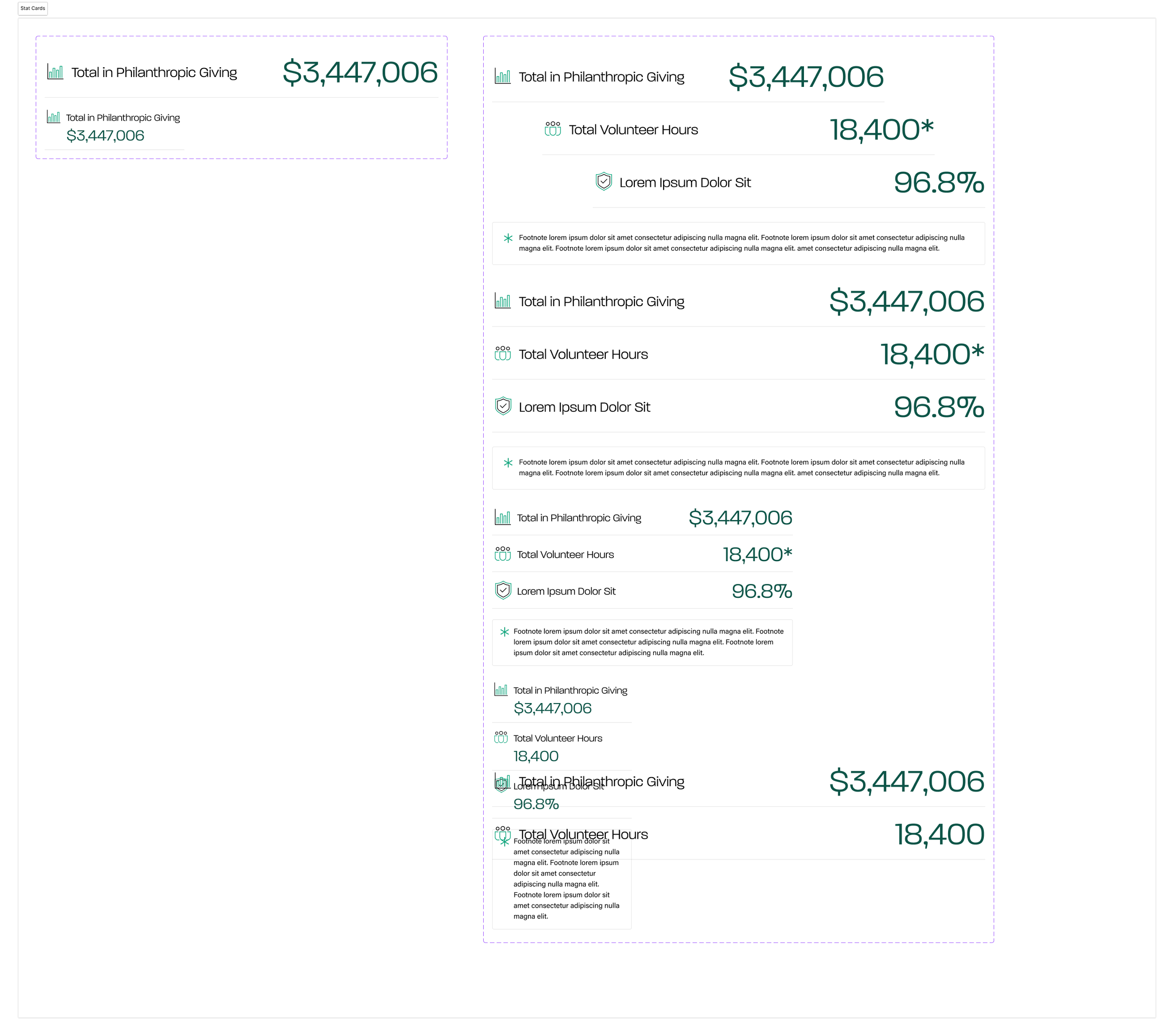
The system was designed so optional content could shift cleanly without breaking layouts, reinforcing a more resilient authoring and reading experience.
Accessibility was treated as a core requirement, with explicit verification for heading structure, skip navigation, keyboard flow, zoom/reflow behavior, focus states, and form usability.
-
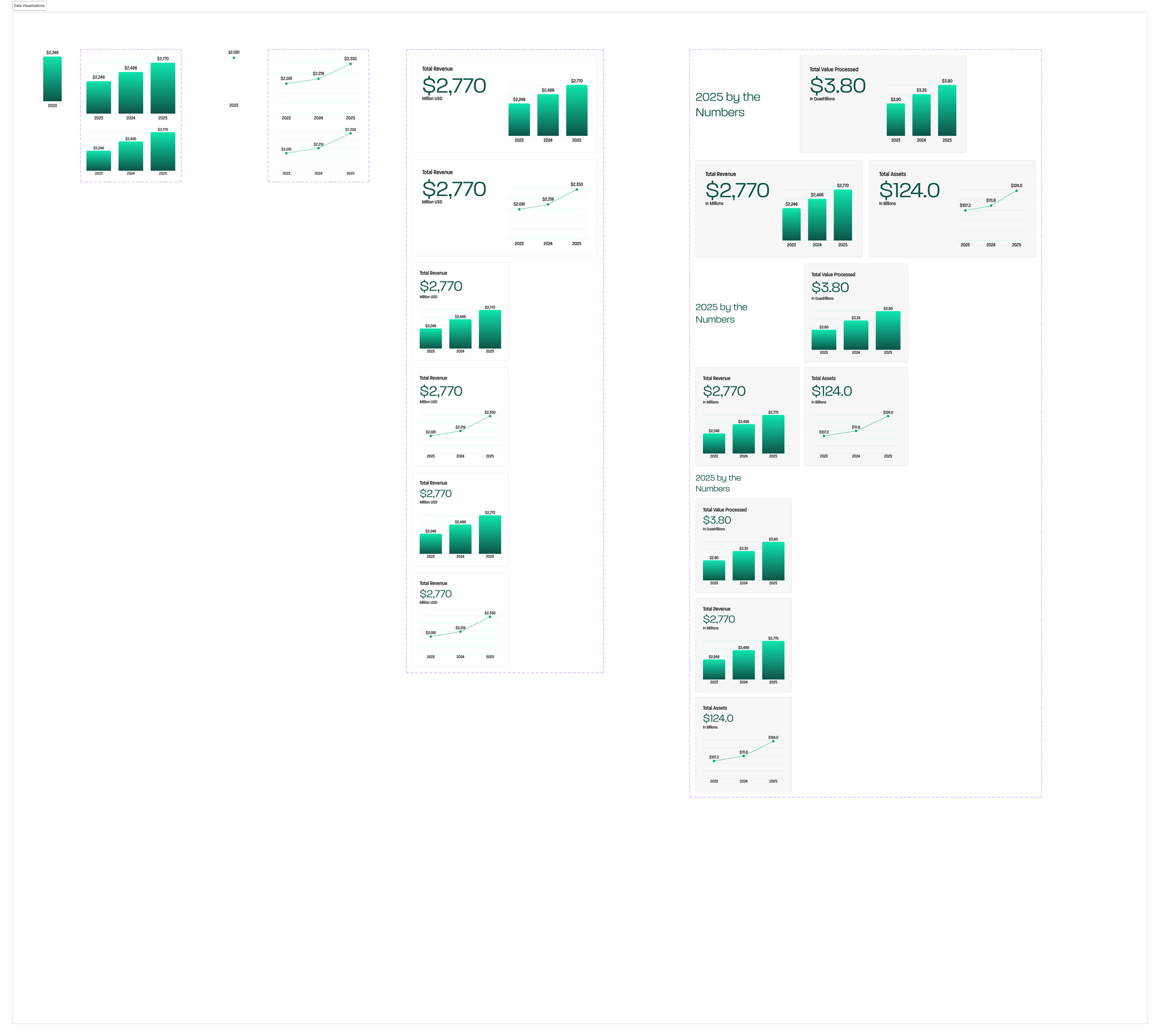
The annual report was built in Optimizely using the General Page template and up to twenty components, including nested structural components.
Verndale paired front-end engineering, Optimizely back-end engineering, and GraphQL setup so the annual report could live as a maintainable feature within DTCC’s broader ecosystem.
Structured data was documented and implemented as part of the build to strengthen search-engine understanding of the report experience.
Pre-launch technical validation included URL structure, robots and sitemap checks, canonical review, analytics/GTM implementation, image optimization checks, and post-launch verification planning.
Content-author training was included so the handoff supported long-term maintainability, not just a successful initial launch.
-
DTCC engaged Verndale specifically to bring the annual report into Optimizely and create a more flexible, reusable framework for future report cycles.
The build scope included up to twenty components, including nested and structural components, for the 2025 annual report.
The project included full desktop and mobile design for the annual report, animation execution, front-end and back-end development, QA, SEO, structured data, and content-author training.
The annual report launched on January 26, 2026, with pre- and post-launch SEO validation documented against the live experience.
The retrospective documented the launch as successful, noted strong positive stakeholder feedback including from the CFO, and described the final experience as visually strong.
The team also called out smoother UAT than prior projects, with clearer bug reporting helping reduce back-and-forth and speed issue resolution.