Experience Strategy for a Global Healthcare Leader
Client Johnson & Johnson MedTech (formerly Abiomed)
Industry Life Sciences / Medical Technology
Role Experience Design Strategy Lead
Services Experience Strategy, UX Strategy, Information Architecture, Digital Product Strategy, Enterprise CMS, UX Design
Primary Audience Healthcare Professionals, Physicians, Clinicians, Hospital Systems
Project Focus Enterprise Digital Experience Modernization

Johnson & Johnson MedTech sought to modernize its digital ecosystem to better support healthcare professionals while creating a scalable foundation for future growth. As its portfolio of products, clinical resources, and educational content continued to expand, the existing digital experience no longer reflected the organization's evolving business objectives or the needs of its users.
Operating within a highly regulated healthcare environment introduced additional complexity. Every experience needed to balance usability, accessibility, governance, compliance, and business priorities while supporting multiple stakeholder groups across marketing, medical affairs, product, technology, and content.
As Experience Design Strategy Lead, I partnered with cross-functional teams to define the future-state experience, establish a scalable information architecture, modernize the digital experience, and create a strategic roadmap that connected business goals with human-centered design principles.
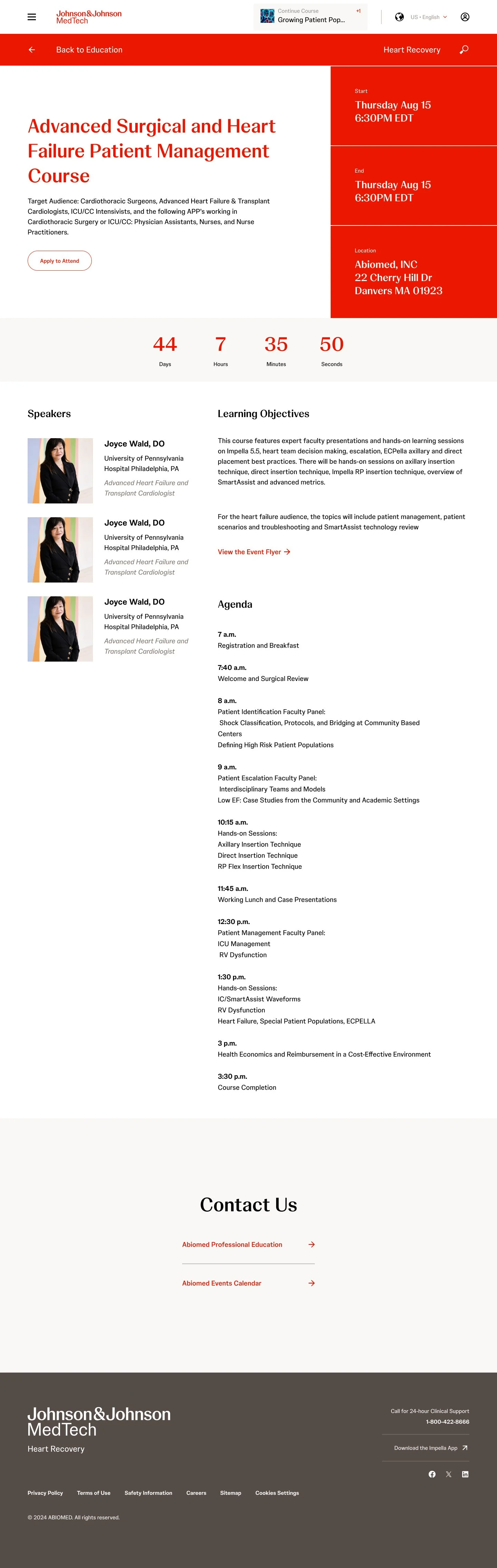
Rather than focusing solely on interface design, the engagement centered on helping the organization rethink how healthcare professionals discover information, engage with educational resources, and navigate an increasingly complex digital ecosystem.
-
Johnson & Johnson MedTech is a global leader in medical technology, developing innovative solutions that improve patient outcomes across cardiovascular care and numerous additional specialties.
Following the acquisition of Abiomed, the organization continued expanding its portfolio of clinical resources, physician education, and digital services supporting healthcare professionals worldwide.
Its digital ecosystem serves multiple audiences including:
Physicians
Surgeons
Clinicians
Hospital administrators
Clinical educators
Prospective healthcare partners
Because these experiences exist within a regulated healthcare environment, digital products must balance exceptional usability with rigorous governance, clinical accuracy, accessibility, and compliance requirements.
-
As Johnson & Johnson MedTech's digital presence evolved, several strategic challenges emerged.
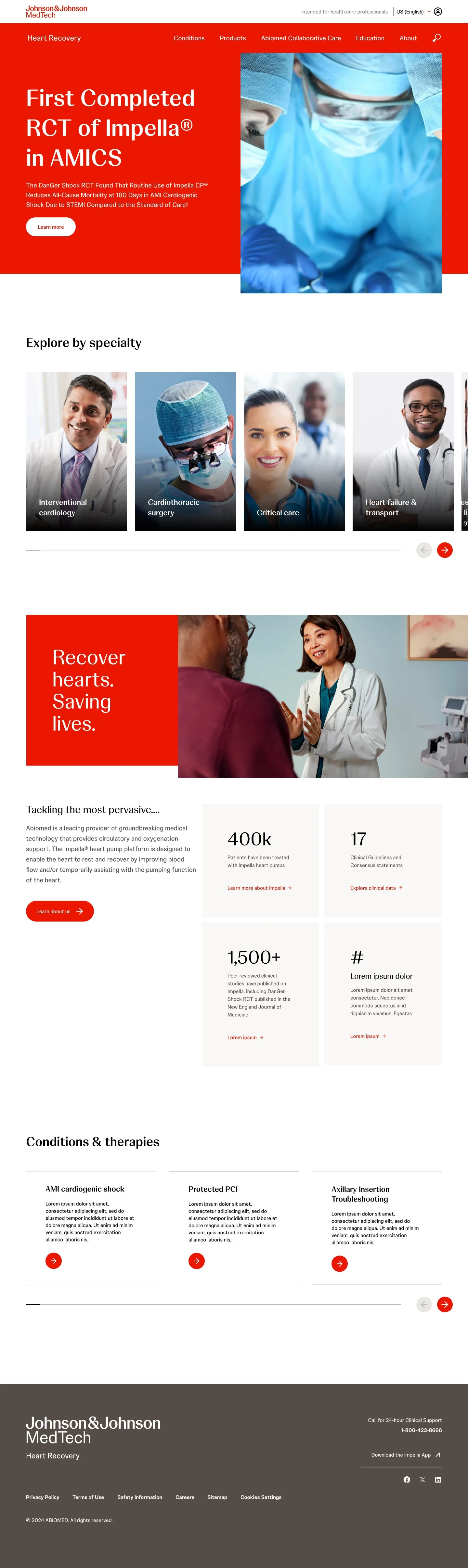
The platform had grown organically over time, making it increasingly difficult for users to quickly locate clinical information, educational resources, and product content. Navigation reflected internal organizational structures more than the mental models of healthcare professionals, while expanding content libraries introduced additional complexity into the overall experience.
Internally, multiple stakeholder groups—including marketing, medical affairs, product, technology, and compliance—needed a shared strategic vision for how digital experiences should evolve.
The organization recognized the opportunity to move beyond incremental improvements and establish a future-ready digital foundation capable of supporting continued innovation.
-
The initiative focused on creating measurable business value through experience strategy.
Primary objectives included:
Improve discoverability of clinical and educational content
Simplify complex healthcare professional journeys
Modernize the overall digital experience
Establish scalable information architecture
Support enterprise content governance
Create reusable design patterns
Improve consistency across digital touchpoints
Build a foundation capable of supporting future digital initiatives
As Experience Design Strategy Lead, I was responsible for guiding the engagement from discovery through strategic definition and experience design.

Capabilities IncludedLeading experience strategy
Facilitating executive stakeholder workshops
Conducting discovery activities
Defining information architecture
Creating user journeys and experience flows
Translating business objectives into experience strategies
Prioritizing opportunities across workstreams
Guiding UX and visual design direction
Partnering with development teams throughout implementation planning
Aligning cross-functional stakeholders around a shared vision
Key Insights
Healthcare professionals needed faster access to critical information.
Clinical content was distributed across multiple areas of the website, requiring users to navigate several pathways before reaching desired information.
Navigation reflected internal organizational thinking.
Content organization often mirrored business structures rather than user expectations, increasing cognitive load and reducing efficiency.
Content governance required greater scalability.
As new products, research, and educational resources continued to grow, existing publishing workflows became increasingly difficult to manage consistently.
Consistency across experiences varied.
Differences in layouts, navigation patterns, and content presentation created unnecessary friction across the digital ecosystem.
Multiple stakeholders required alignment.
Success depended not only on design improvements but also on creating shared understanding across business, marketing, medical, technology, and compliance teams.
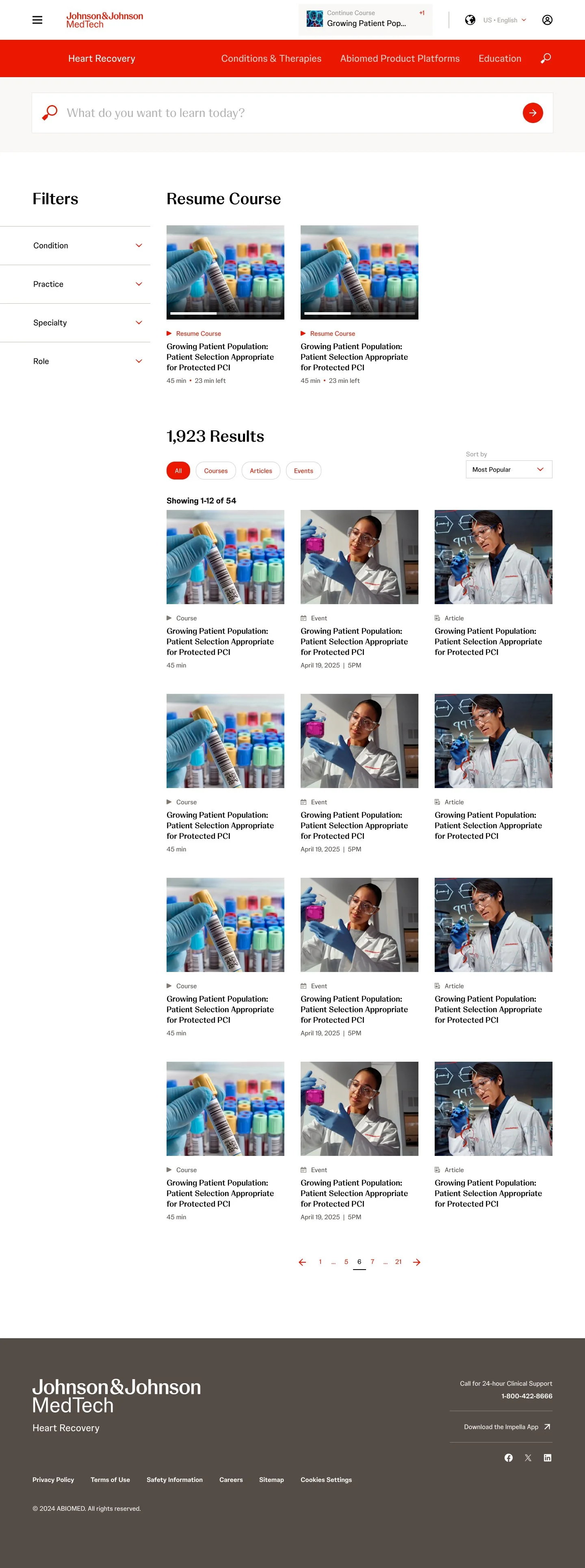
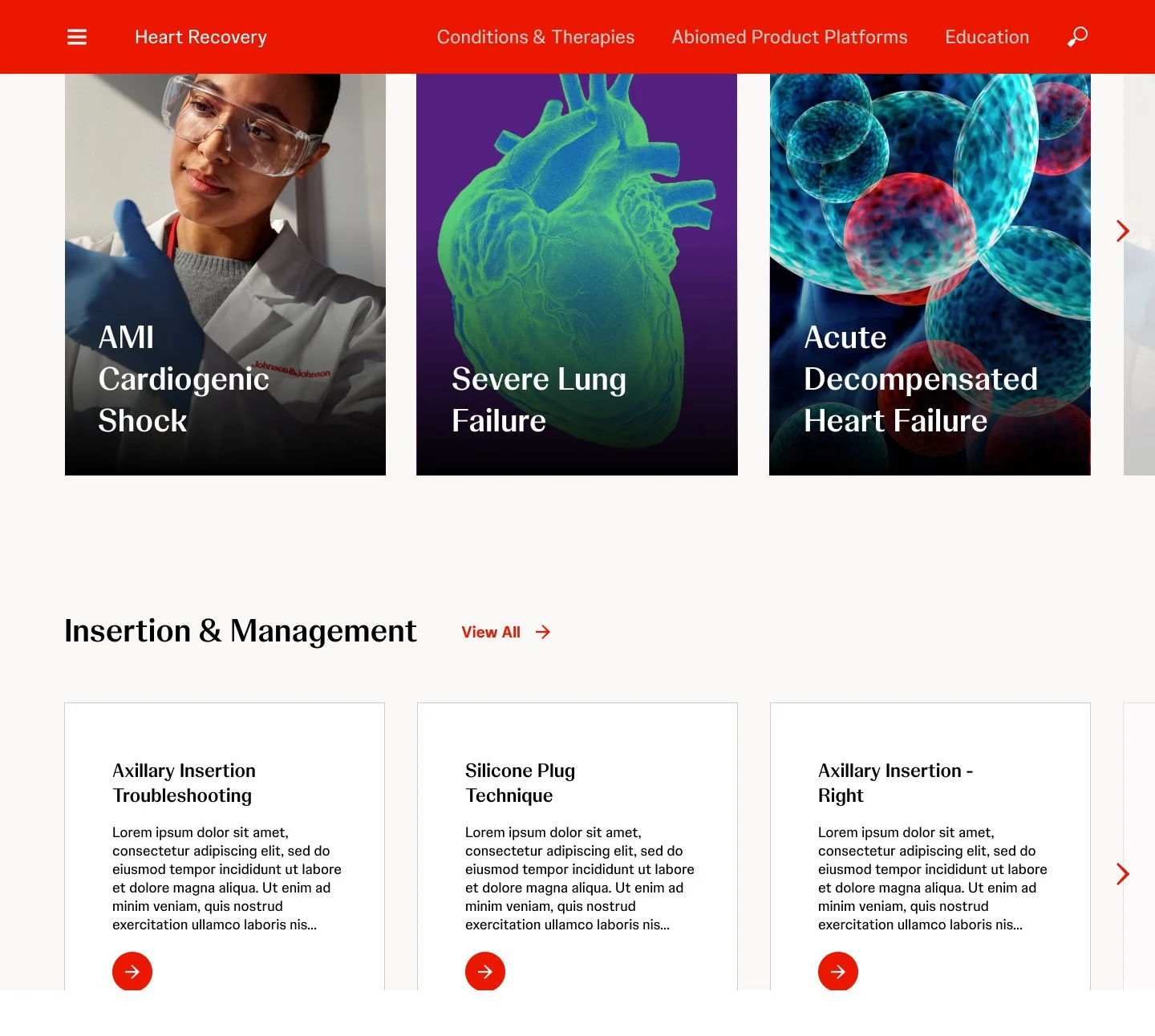
Experience Strategy
Discovery insights informed a future-state experience strategy centered around simplicity, scalability, and long-term flexibility.
-
Information architecture became a foundational component of the engagement.
Working alongside stakeholders, we re-evaluated how healthcare professionals navigated the ecosystem and developed recommendations that prioritized intuitive content organization and simplified user pathways.
Key areas included:
Navigation strategy
Content hierarchy
Taxonomy recommendations
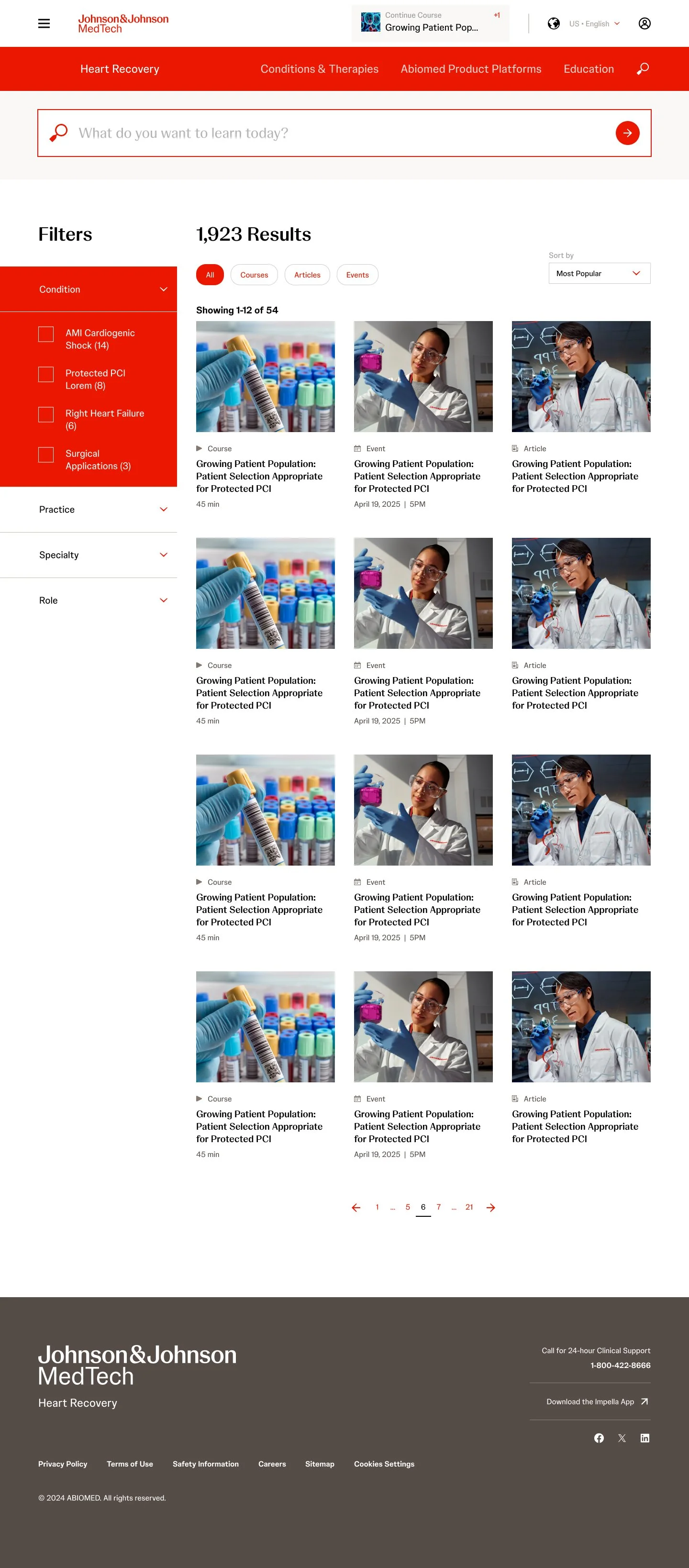
Search optimization
Cross-linking opportunities
Template strategy
Content relationships
The goal was not simply reorganizing pages, but creating an extensible architecture capable of supporting long-term growth.
-
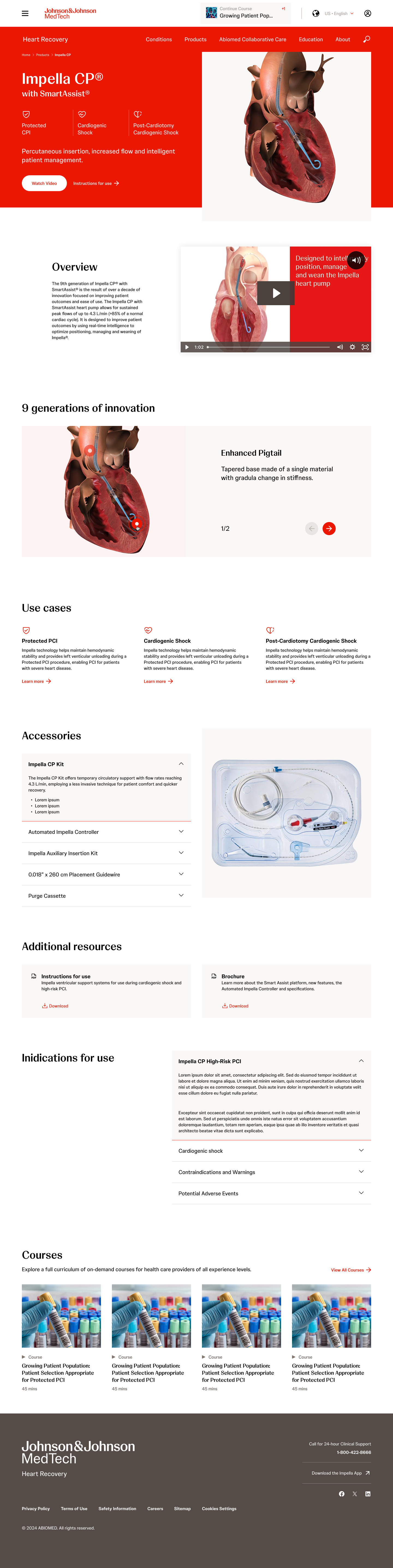
With the strategic foundation established, experience concepts translated recommendations into tangible digital experiences.
Design efforts emphasized:
Clear clinical readability
Accessible interaction patterns
Responsive layouts
Modular design components
Flexible CMS implementation
Consistent user interactions
Every design decision supported both user needs and the operational realities of maintaining digital experiences within a regulated healthcare environment.
-
Beyond interface design, the engagement focused heavily on creating a scalable content ecosystem.
Recommendations included:
Modular page templates
Reusable components
Flexible content models
Governance considerations
Editorial consistency
Future publishing scalability
This strategic approach reduced long-term complexity while supporting future digital initiatives.
-
Experience strategy extended beyond design deliverables.
Throughout implementation planning, I collaborated closely with cross-functional teams to ensure recommendations remained practical, scalable, and aligned with technical capabilities.
This included:
Prioritizing roadmap initiatives
Supporting CMS implementation planning
Partnering with developers
Translating strategy into implementation guidance
Defining reusable experience patterns
Supporting phased delivery planning
-
The engagement established a strategic foundation for continued digital transformation.
Key outcomes included:
A modernized experience strategy aligned with organizational goals
Improved content discoverability for healthcare professionals
Simplified navigation across complex information ecosystems
Scalable information architecture supporting future growth
Greater consistency across digital experiences
Enhanced collaboration between business, content, technology, and design teams
A flexible enterprise framework capable of supporting long-term evolution
-
This project represented far more than a UX engagement.
It required facilitating strategic conversations across diverse stakeholder groups while balancing business priorities, regulatory considerations, and user needs.
Throughout the engagement I:
Led executive stakeholder workshops
Guided strategic decision-making
Facilitated cross-functional alignment
Managed competing priorities across multiple teams
Connected business objectives with human-centered design
Developed scalable experience strategies
Partnered closely with product, development, and content teams
Helped translate strategic vision into executable implementation plans
Reflection
Healthcare experiences require more than intuitive interfaces—they require trust, precision, and the ability to navigate complexity.
Leading this engagement reinforced the importance of balancing human-centered design with regulatory requirements, enterprise governance, technical constraints, and long-term business strategy.
More importantly, it demonstrated how experience strategy can serve as the connective tissue between business vision and digital execution. By aligning diverse stakeholders around a shared direction and designing systems built for growth, the project established a foundation that extended well beyond a website redesign.
Today, I continue to bring this same strategic approach to enterprise transformation initiatives—helping organizations define where they're going, align cross-functional teams around a common vision, and translate complex business challenges into meaningful digital experiences.