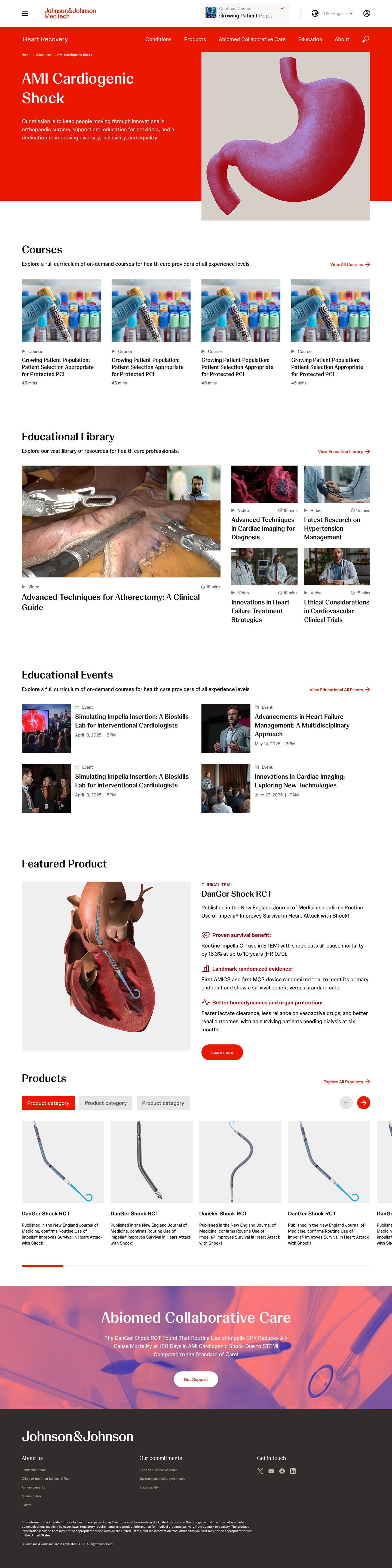
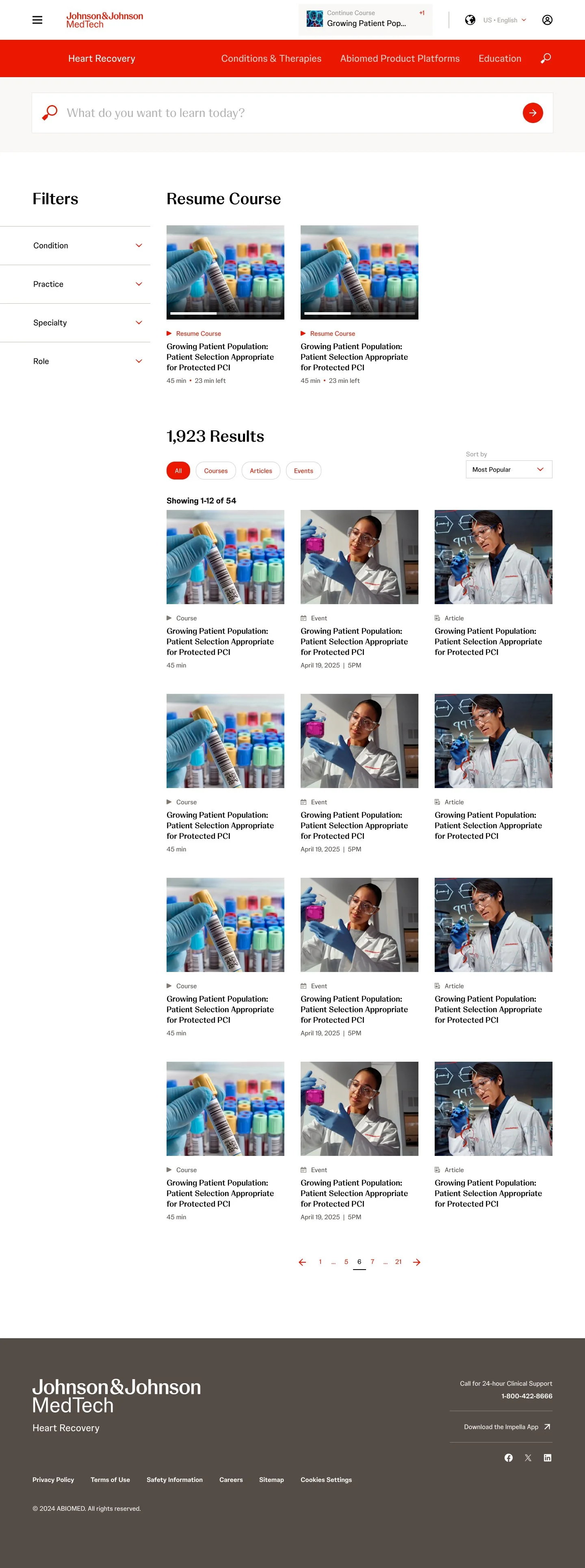
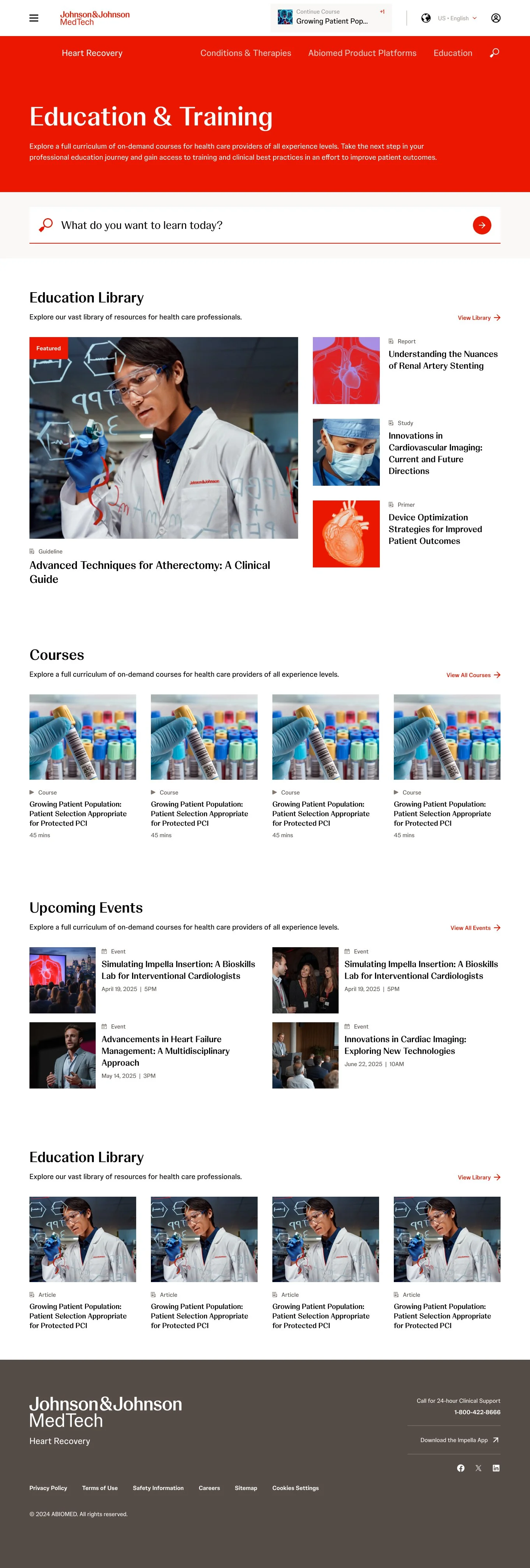
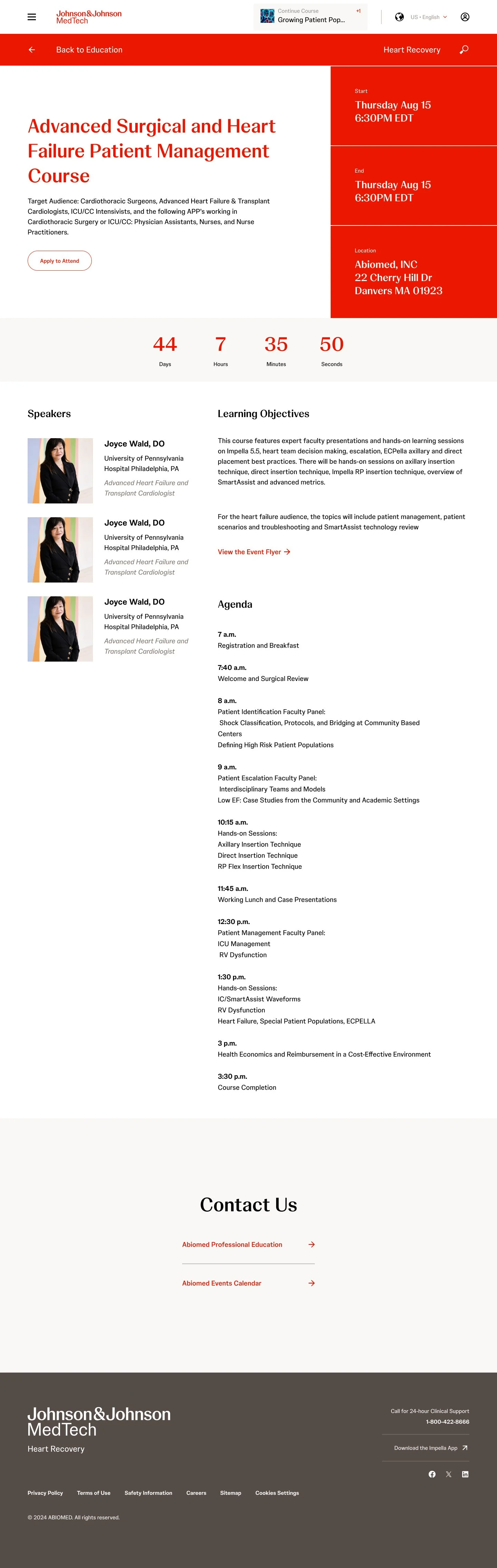
A Digital Ecosystem for Patients, Caregivers, and Healthcare Professionals
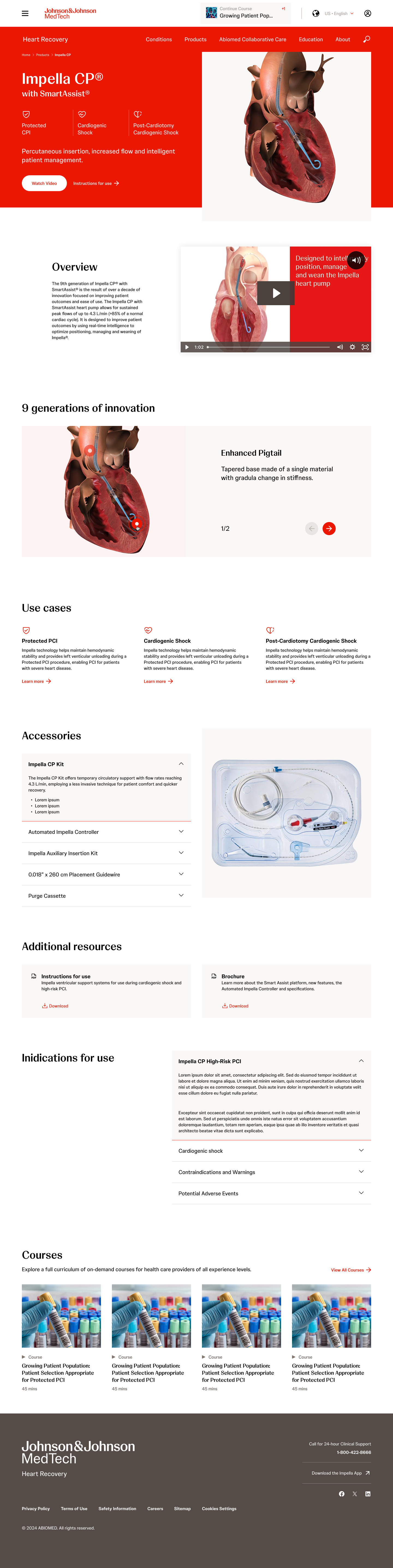
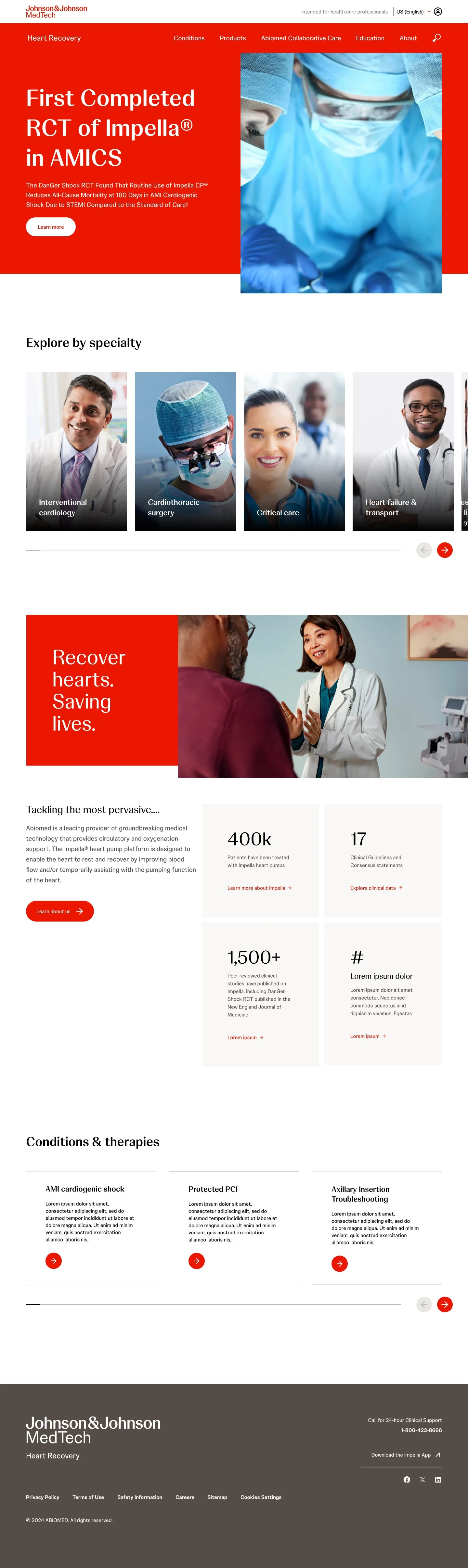
Abiomed partnered with Verndale to strengthen HeartRecovery.com as the primary digital hub for heart-recovery programs, HCP education, and patient storytelling while consolidating key Abiomed.com content into a more unified experience.
This work was not just a content migration. It combined UX strategy, information architecture, audience clarity, and platform-scale thinking to help HeartRecovery.com function more effectively across multiple audiences inside the broader Johnson & Johnson MedTech ecosystem.
The Challenge
Abiomed’s digital ecosystem serves overlapping audiences with different needs, including healthcare professionals, hospital program leaders, patients, and caregivers.
That complexity created a UX challenge: HeartRecovery.com needed to feel credible, efficient, and clinically useful for time-constrained HCPs, while also supporting broader brand storytelling and audience-specific content paths.
There was also a structural challenge. Abiomed.com contained corporate, leadership, mission, and audience-toggle content that needed to move into HeartRecovery.com without losing clarity between HCP and general-public experiences.
Our Approach
Reframe HeartRecovery.com as the primary hub
1
Verndale approached HeartRecovery.com as the central destination for heart-recovery content, HCP education, and program-support features rather than as a simple downstream brand site.
The strategic direction was to consolidate key Abiomed.com content into HeartRecovery.com while maintaining audience clarity and aligning the experience more closely to the broader J&J ecosystem.
Use UX to reduce friction for clinical audiences
2
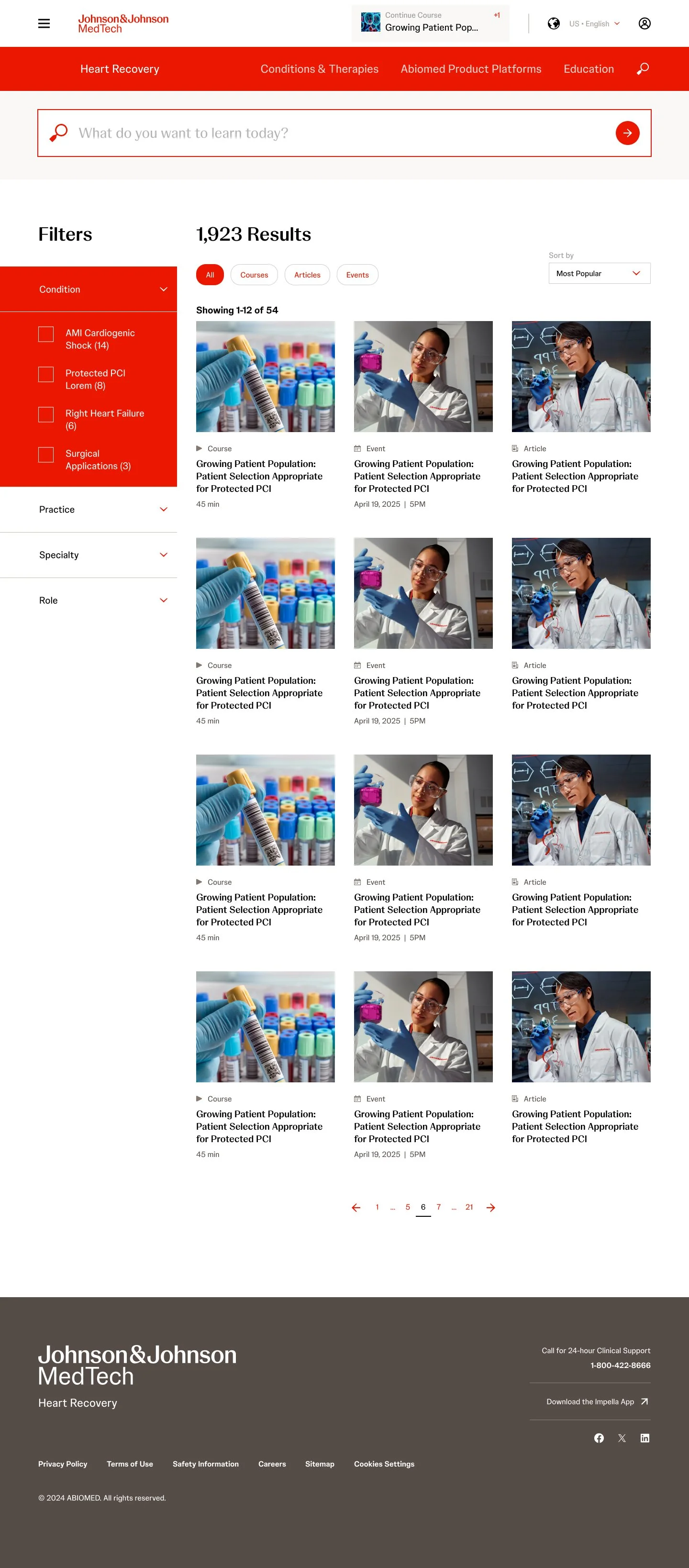
Verndale’s UX lens centered on creating more efficient, task-focused journeys for HCPs and program leaders. Internal strategy framed the opportunity as “service over marketing,” noting that the existing HeartRecovery experience required already-converted audiences to work too hard to interpret the interface and accomplish their tasks.
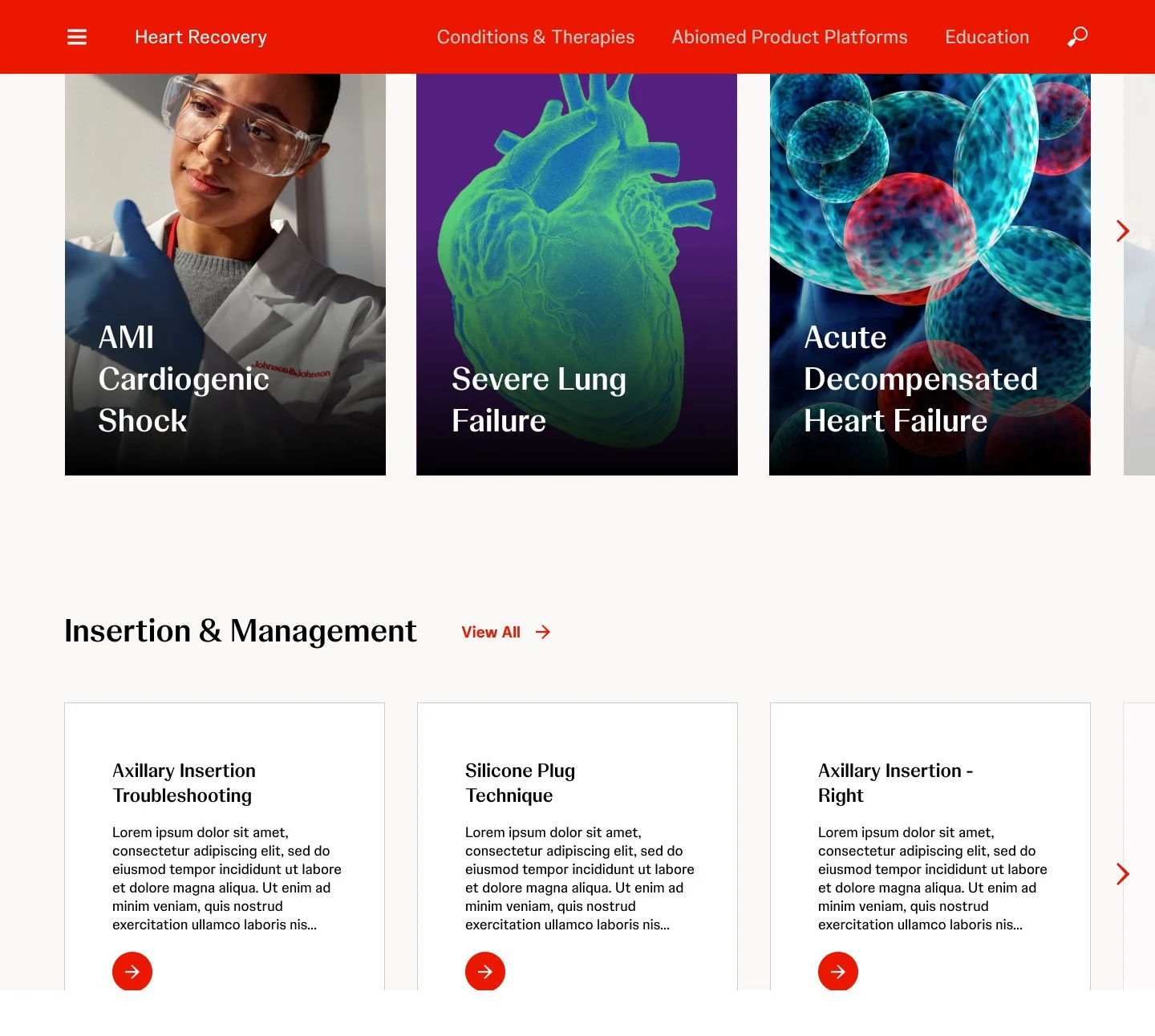
The response was to explore task-focused homepage and navigation patterns, frictionless first actions, and stronger orientation to site value for hurried audiences operating under pressure.
Build the migration around content clarity, not just file movement
3
The content plan was structured around key business and audience decisions: consolidating About content, keeping leadership visible, maintaining a Careers landing page with J&J job linkouts, elevating patient stories within the “Our Purpose” narrative, and documenting parity for the HCP/general public toggle.
That made the migration a product-design exercise as much as a content exercise, because each decision shaped how different audiences would understand the ecosystem and find the right information.
Support a scalable ecosystem, not a one-off site
4
The HeartRecovery work also informed adjacent initiatives, including CAMP UX review, education/training improvements, and follow-on content planning for V-Wave using the same HeartRecovery design system and templates.
This reflects a larger systems mindset: create patterns, structures, and components that can support multiple properties and future migrations, not just a one-time update.
Designing Beyond the Interface.
Abiomed Heart Recovery is a strong example of the team bringing UX, content strategy, and ecosystem-level product thinking together in a medically complex environment. The work was not just about moving content from one site to another. It was about creating a clearer, more credible, and more scalable digital hub that could better serve healthcare professionals while reinforcing Abiomed’s broader heart-recovery story.
-
HeartRecovery.com was positioned as a central hub for HCP education, heart-recovery programs, and patient stories rather than a narrow product-marketing site.
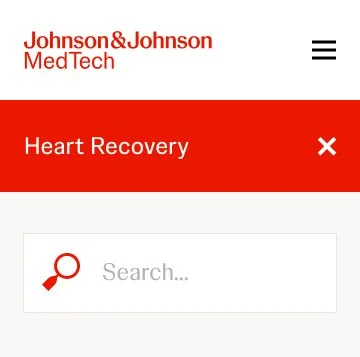
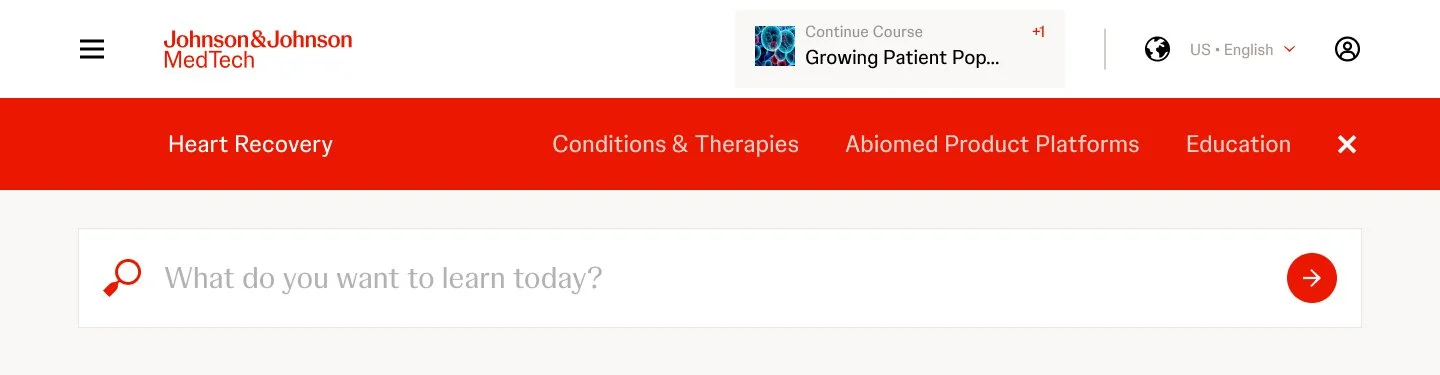
The UX strategy focused on clearer orientation, faster first actions, and more task-focused homepage and navigation patterns for time-constrained clinical audiences.
Patient stories were intentionally elevated as the centerpiece of the “Our Purpose” narrative to reinforce the “Recovering Hearts. Saving Lives.” brand promise.
CAMP-related work emphasized IA simplification, clearer journeys for members versus prospective users, and stronger storytelling around program value, content libraries, and events.
-
The migration was planned through a structured content matrix to move key Abiomed.com content into HeartRecovery.com while preserving audience clarity and ecosystem alignment.
Leadership content, careers structure, and HCP/general-public toggle behavior were treated as explicit requirements rather than incidental content details.
The HeartRecovery ecosystem was built to support adjacent experiences and future migration efforts, including V-Wave, by reusing the same templates, modules, and design system.
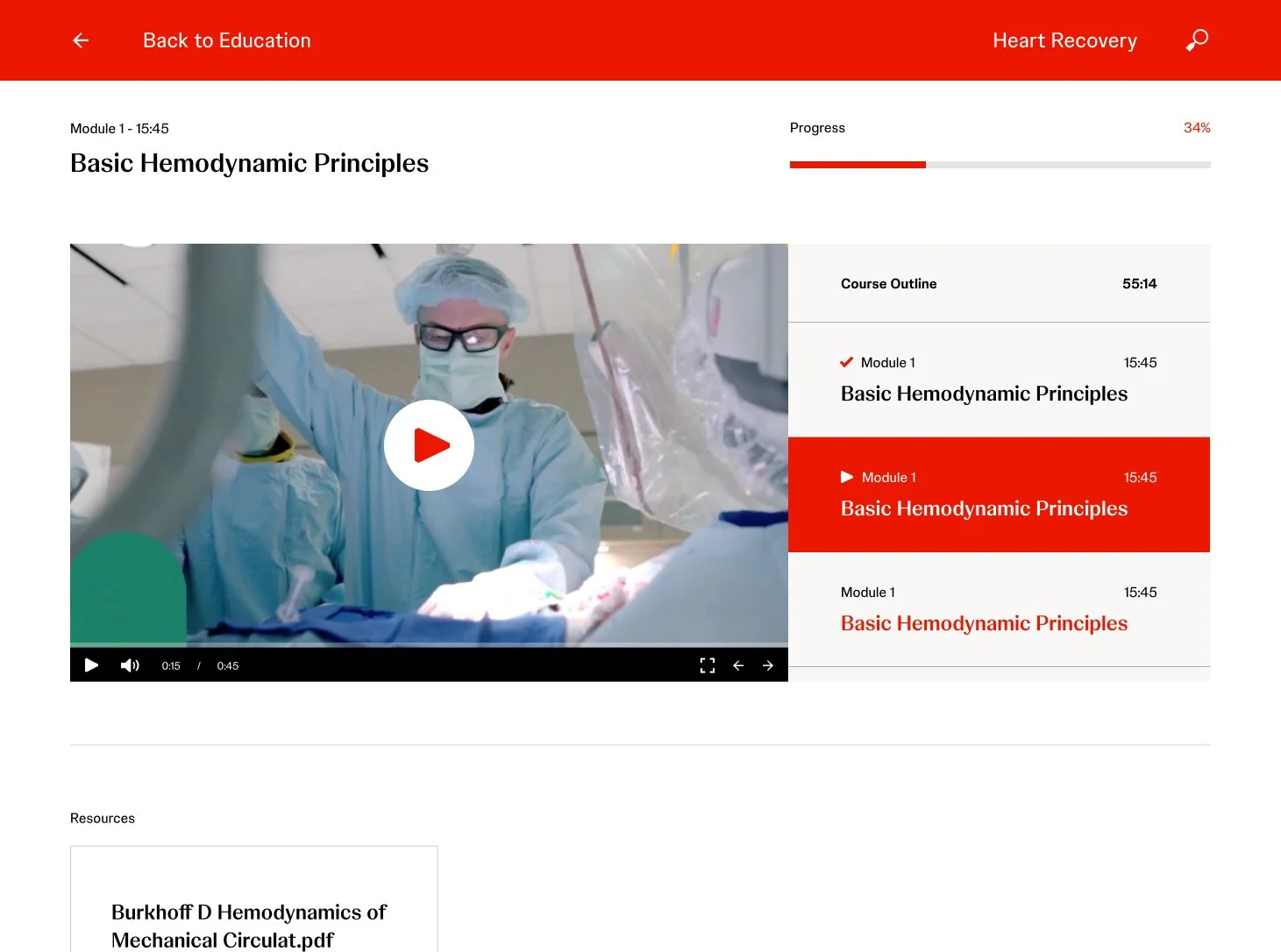
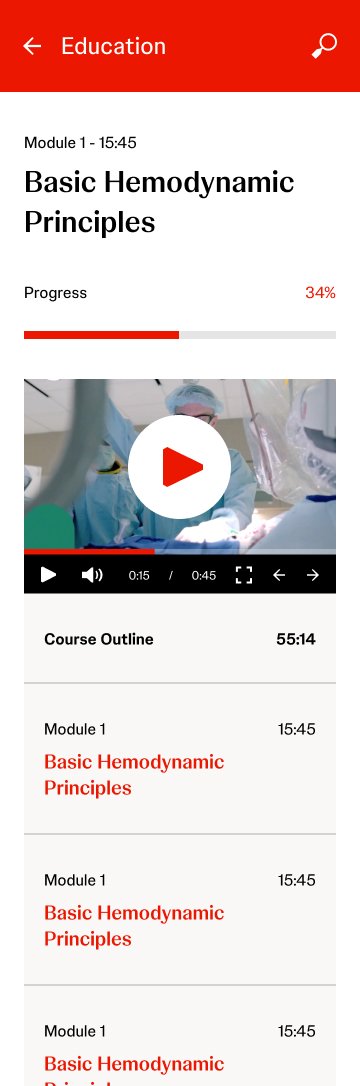
Optimization work extended beyond page creation into scoped UX improvements like privacy-policy/webform flows, content refresh, grid/menu/search updates, and training/education experience refinement.
-
HeartRecovery.com was defined as the flagship digital hub for heart-recovery programs, HCP education, and patient stories within Abiomed’s broader digital ecosystem.
The project included a comprehensive content-matrix and IA effort to consolidate Abiomed.com content into HeartRecovery.com while maintaining HCP/general-public clarity.
The migration plan explicitly preserved critical content areas including leadership, careers, and “Our Purpose” patient-story content.
UX strategy was grounded in the reality that HeartRecovery’s clinical audiences are time-constrained and need faster, clearer, more service-oriented digital pathways.
The work established a scalable system that could inform adjacent experiences like CAMP and V-Wave using shared templates, modules, and design standards.