
Launching a Luxury Brand Experience with Future Scale in Mind
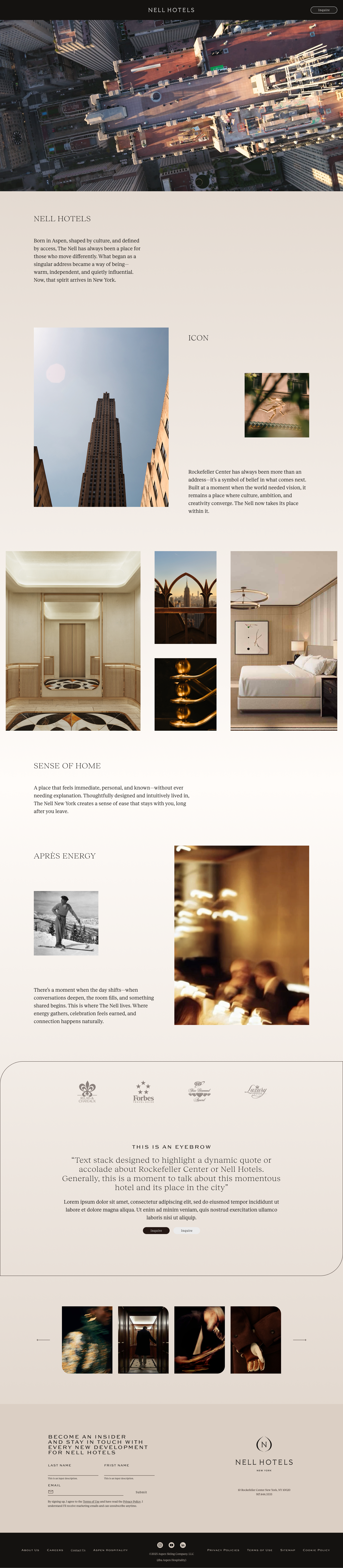
The Little Nell partnered with Verndale to launch a two-page splash experience that could serve as both an immediate brand presence and the first live expression of a much larger platform transition.
This work was not just a temporary microsite. It was designed as a pull-forward of the future Little Nell redesign, using reusable templates, shared components, and foundational Contentstack setup that would feed directly into later phases of the broader platform roadmap.
The Challenge
The Little Nell is Aspen’s flagship luxury hospitality brand, so even a short-term splash experience had to feel premium, intentional, and on-brand from day one.
At the same time, the splash page needed to do practical work. It had to launch quickly, support core content and inquiry needs, and create a stable bridge between the current live experience and the future full-site redesign.
That created a product-design challenge: build something lean enough to move fast, but structured enough to establish patterns the full Little Nell site could reuse later.
Our Approach
Treat the splash page as a strategic first release
1
Verndale framed the work as more than a stopgap page. Phase 1 included the initial Contentstack environment, core codebase, CI/CD, and edge configuration needed to support future multi-site deployments across The Little Nell.
Pull forward the right design system decisions
2
Instead of inventing one-off splash-page patterns, the team aligned the experience with future-phase component thinking.
Tighten the UX through system cleanup
3
A substantial portion of the work focused on refining spacing, layout behavior, component consistency, and form interactions so the splash page would feel polished despite its constrained scope.
Build authoring and accessibility into the foundation
4
The team also made deliberate decisions around CMS behavior and accessibility. That included helper text where Contentstack could not enforce content rules directly, accessible carousel controls, and color-structure work to support a more durable design system.
Smart Systems. Better Experiences.
The Little Nell Splash Page is a strong example of the team bringing UX systems thinking, technical foundation work, and pragmatic launch strategy together in a luxury hospitality environment. The work was not just about getting a placeholder page live. It was about creating a polished first release that established reusable patterns, reduced design and authoring friction, and set up the future full-site experience on a stronger platform foundation.
-
The splash page was intentionally small in scope, but it was treated as a branded experience rather than a holding page.
Layout cleanup standardized spacing, alignment, and responsive behavior across hero, media, carousel, and footer sections.
The design system work introduced scalable spacing tokens, container padding tiers, typography variables, and structured color variables to create a cleaner and more consistent front-end experience.
Inquiry and form components were refactored and standardized so key user actions felt more cohesive and better aligned with the rest of the experience.
Carousel behavior was intentionally unified across the experience, with CMS toggles for arrows and dots balanced against accessibility requirements.
-
The splash experience was scoped as a two-page microsite on its own domain, not just a static landing page.
The build included up to two templates and fourteen reusable components for the splash experience.
Completed design-system and UX foundation work included responsive spacing tokens, typography variables, color variables, accessibility color structure, and form-component standardization.
-
Aspen Snowmass represents a large, high-visibility destination business with four mountains, more than 5,300 acres, 40 lifts, and 330-plus trails.
The redesign was positioned specifically to align AspenSnowmass.com with Aspen’s luxury brand, create an immersive four-mountain experience, and improve conversions.
Post-redesign, Aspen Snowmass saw a 10% lift in overall traffic.
Information-architecture updates helped drive roughly 20% year-over-year organic search lift while sustaining a critical acquisition channel.
Internal materials also reference a material increase in revenue conversions year over year following the redesign.
The experience roadmap continued beyond the redesign into an Experiences Portal framework intended to unify discovery, improve engagement, increase wallet share, and support long-term ecosystem growth.
