Building a Digital Foundation for Greater Global Impact
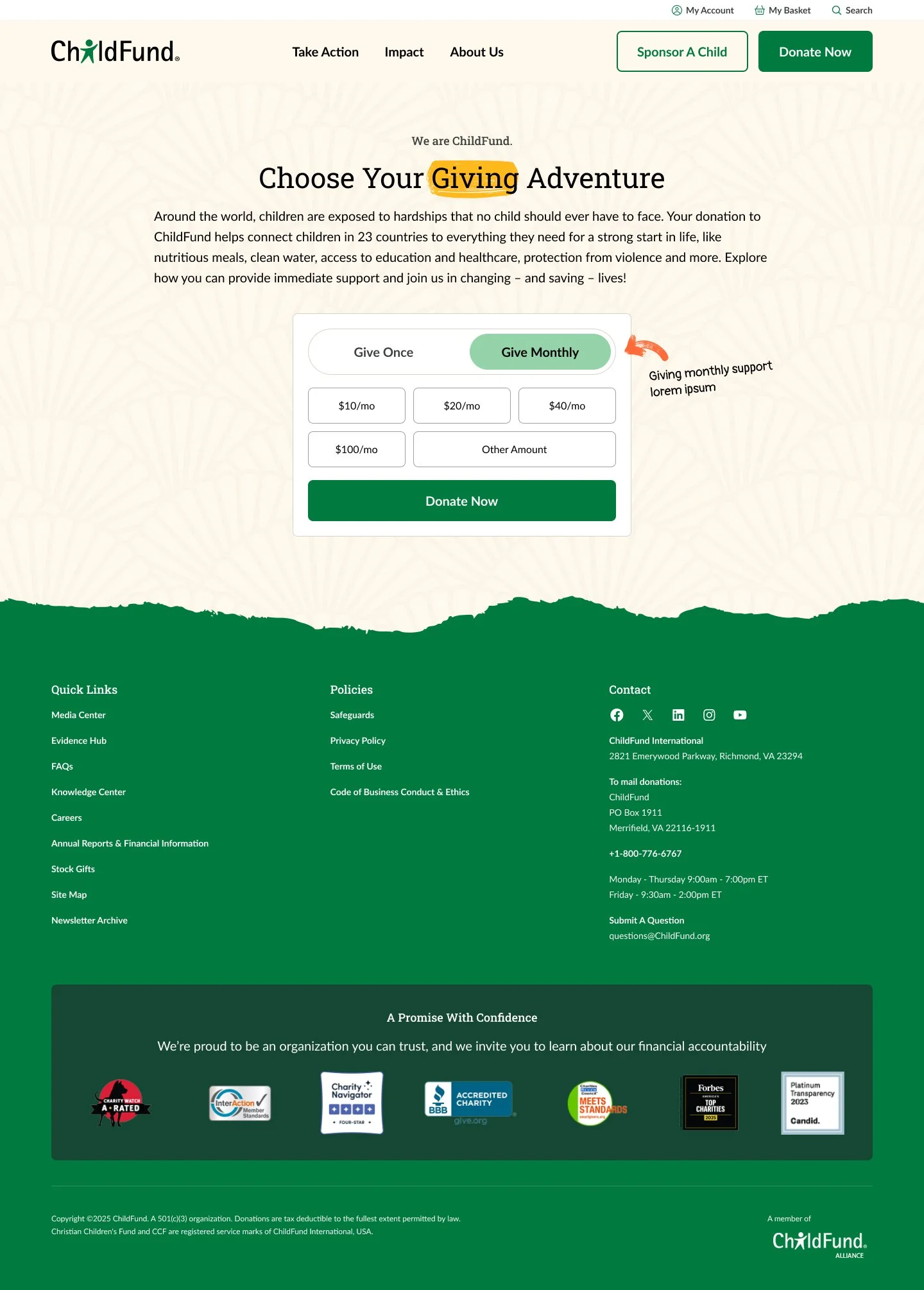
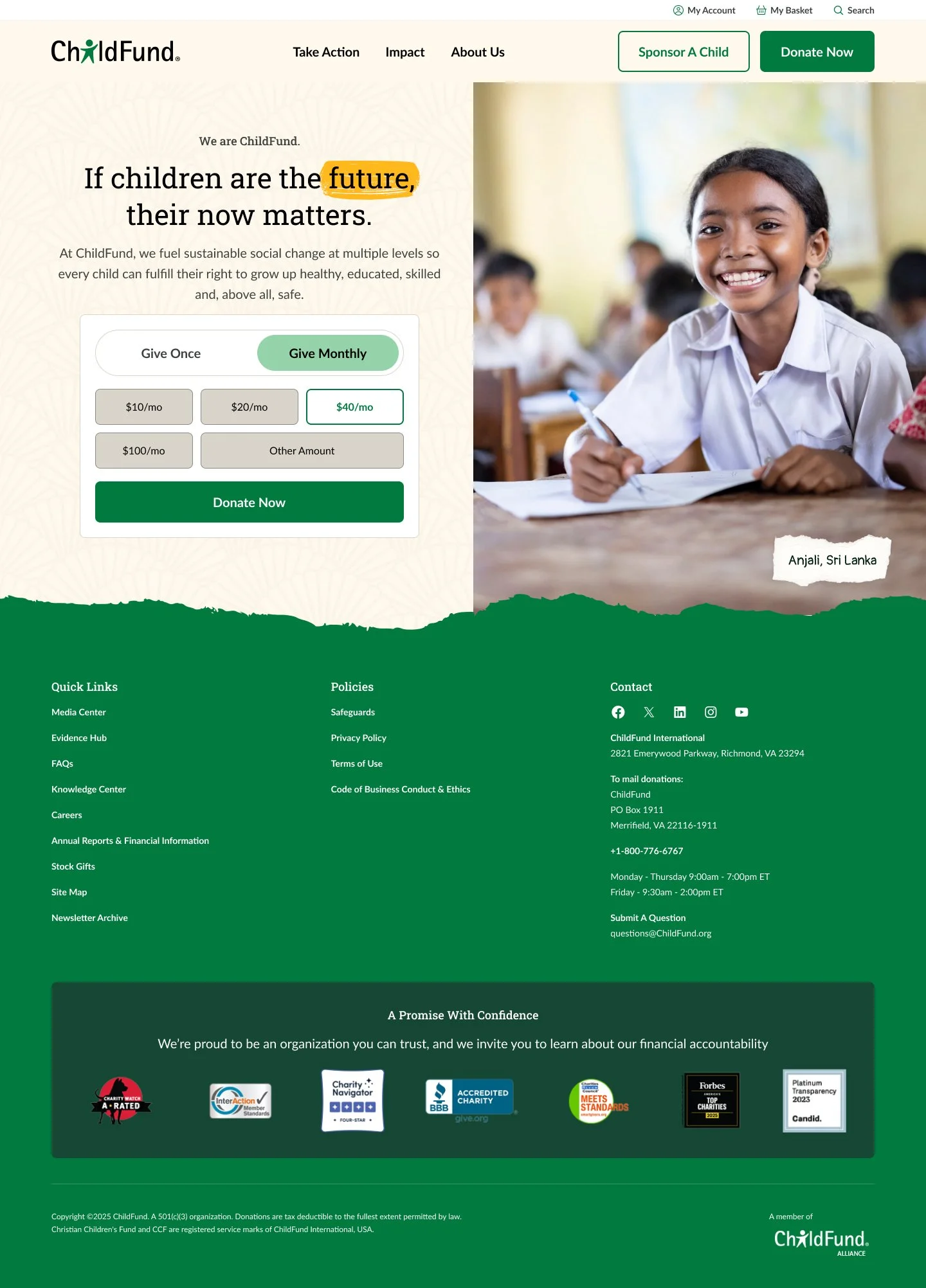
ChildFund partnered with Verndale on a full-site modernization of ChildFund.org, centered on rebuilding the experience in Optimizely 12 with particular focus on donor journeys, sponsorship flows, portal/account functionality, and commerce.
This was more than a platform upgrade. The work addressed long-standing stability and integration issues from ChildFund’s previous Optimizely 11 environment while creating a more scalable foundation for fundraising, sponsorship, and logged-in user experiences.
The Challenge
ChildFund’s previous site had been moved into Optimizely 11 without an Optimizely partner, which led to ongoing stability problems and third-party integration issues.
At the same time, the organization needed digital improvements that could support bigger business goals: diversifying fundraising resources, improving digital capabilities, and helping ChildFund increase its reach to 100 million children annually by 2030.
The UX challenge was equally important. Internal review documented friction in first-click clarity, overloaded navigation, contribution flows, and donor dashboard organization, all of which made it harder for users to scan, decide, and complete key actions confidently.
Our Approach
Rebuild the right foundation
1
We recommended rebuilding the experience in Optimizely 12 rather than continuing to patch the prior setup. The resulting scope included Optimizely CMS + Commerce, donation and sponsorship flows, portal/account functionality, service-layer integrations, and Opti ID / Entra-based access setup.
Improve clarity across key user journeys
2
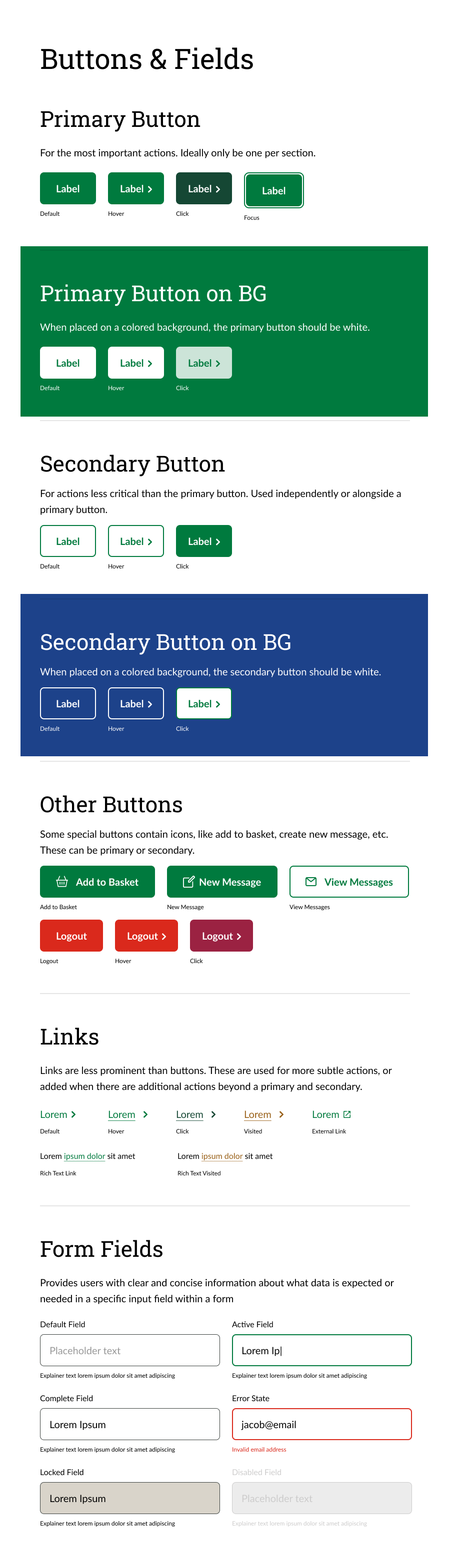
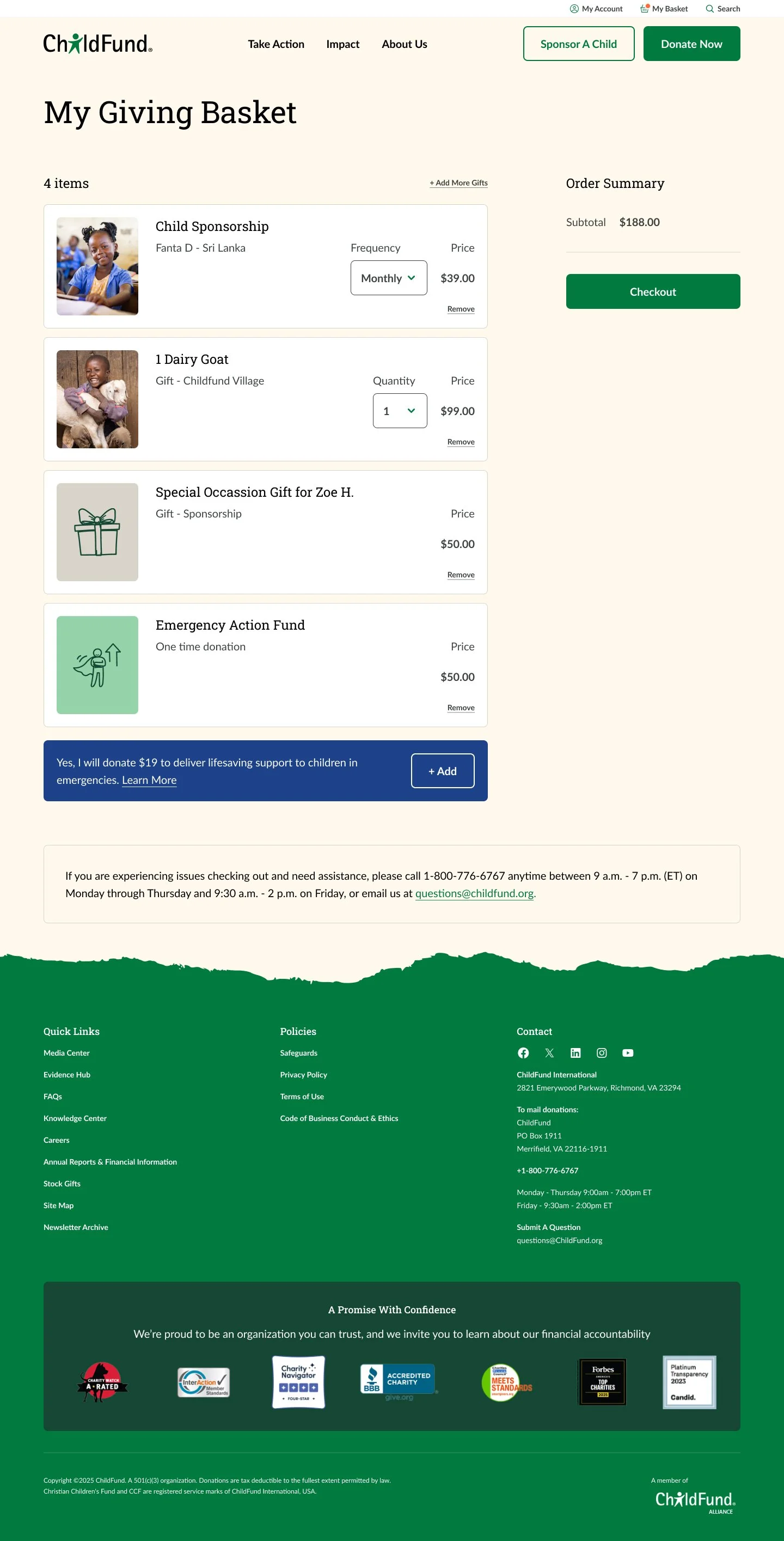
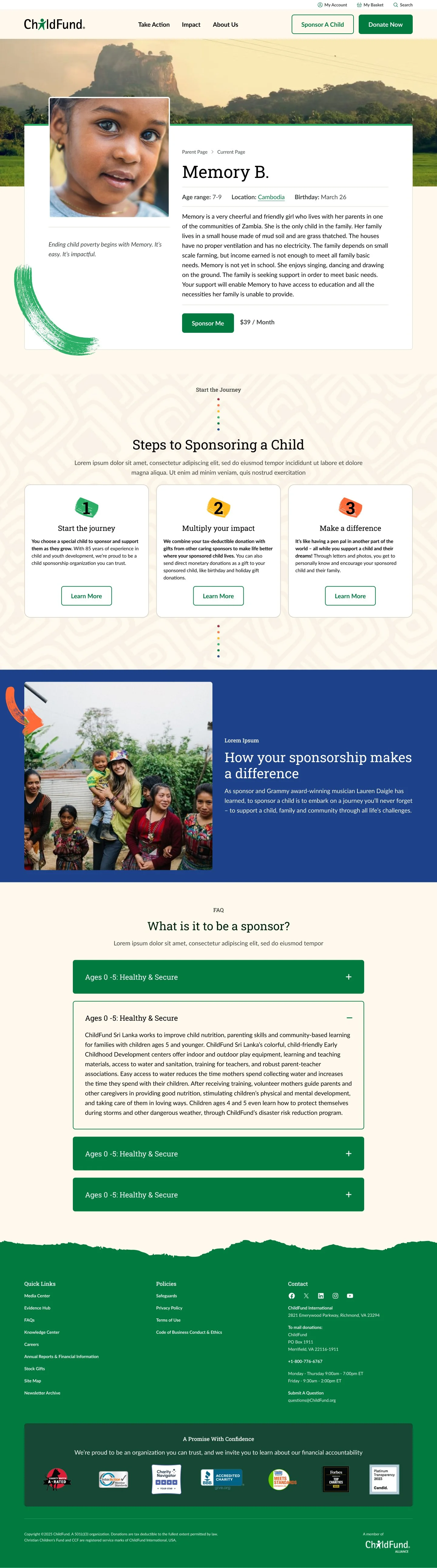
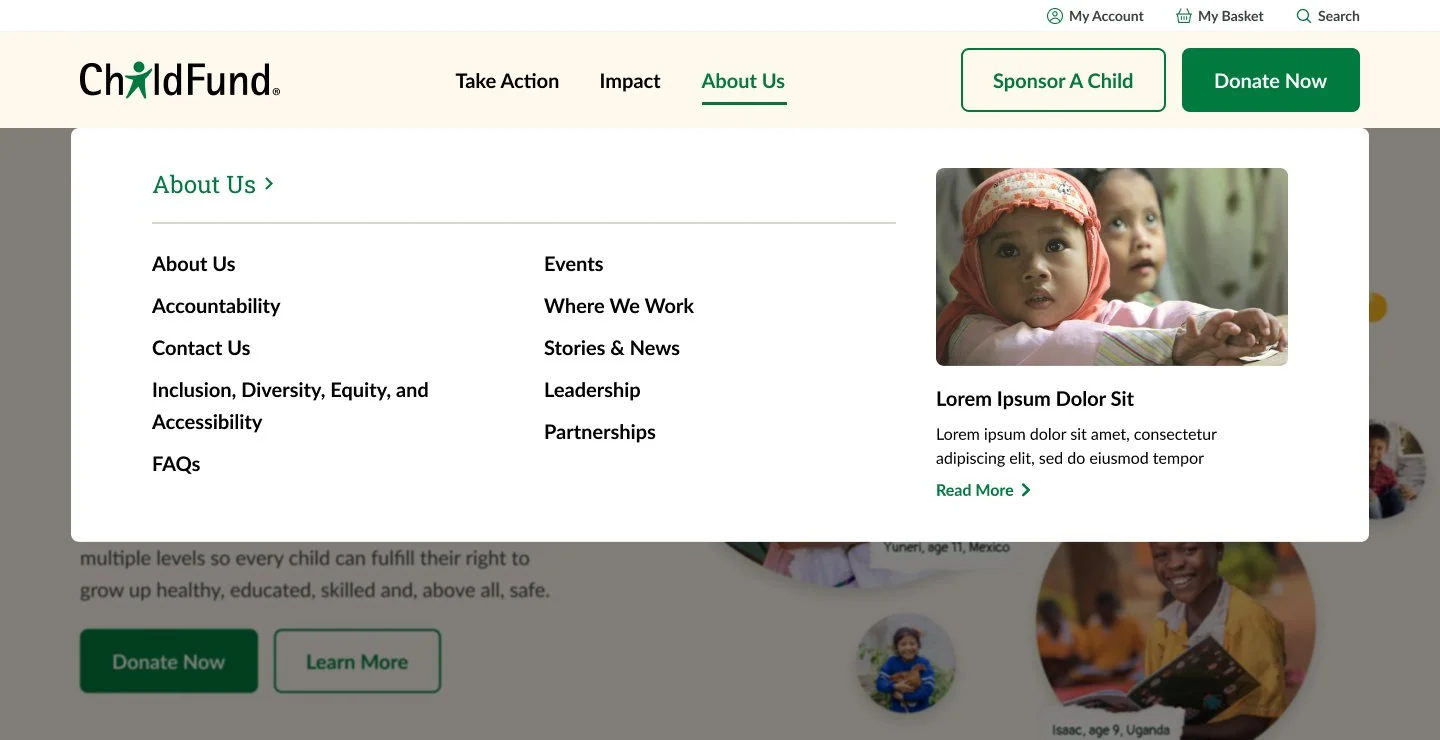
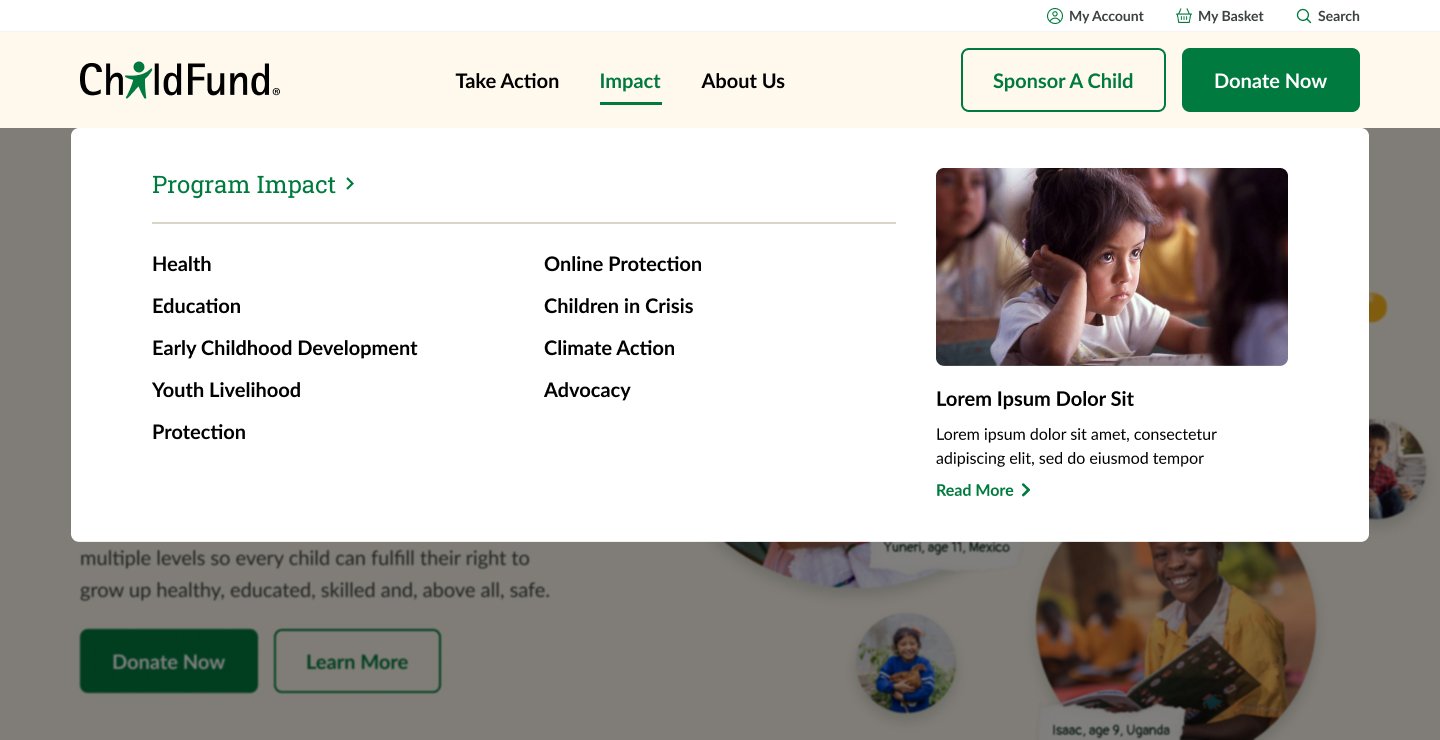
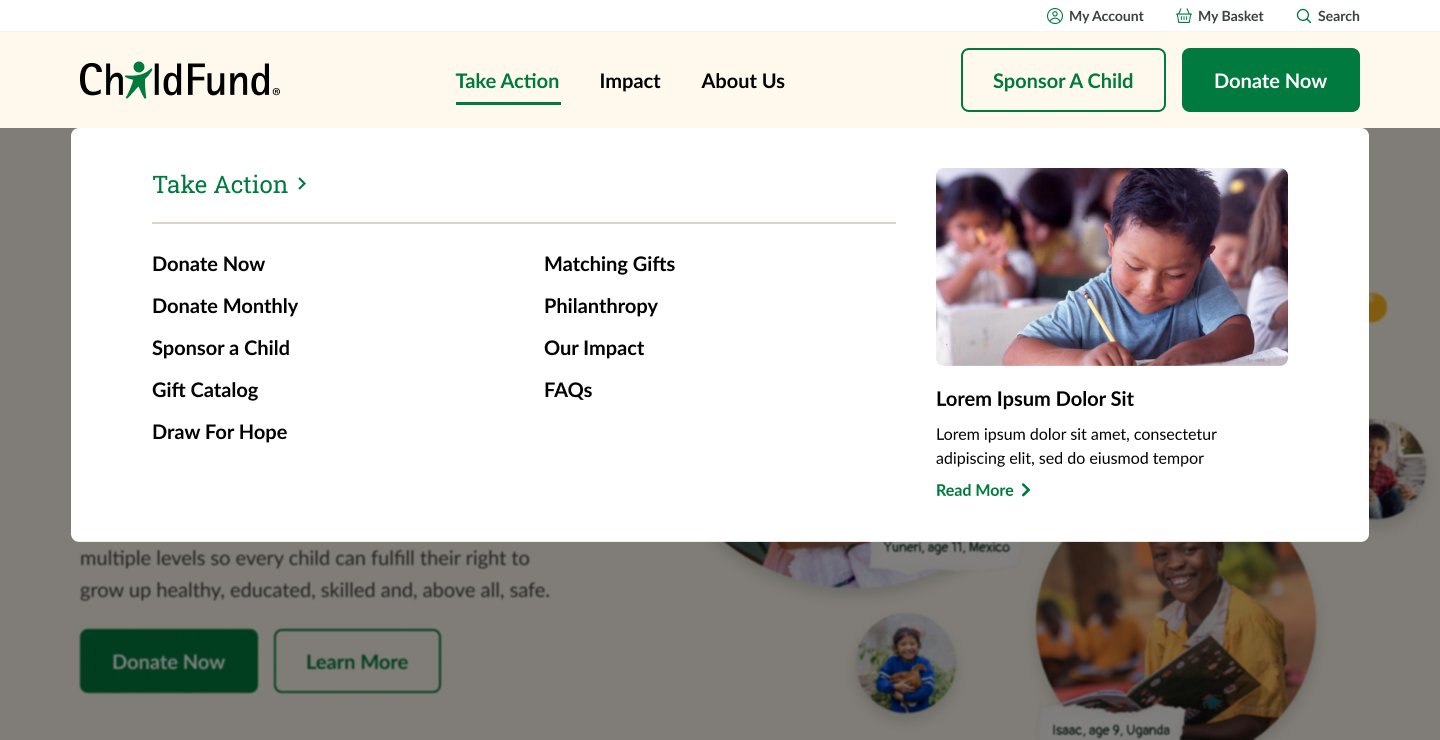
The team focused on making core journeys easier to understand and act on. That included more focused navigation, clearer first-click pathways, streamlined contribution experiences, and a more scannable, organized donor dashboard for logged-in users.
Balance UX ambition with defensible measurement
3
Because ChildFund’s existing conversion data had reliability issues, Verndale was careful not to overpromise exact conversion outcomes. Instead, the team framed impact around more defensible UX improvements and directional conversion benchmarks tied to reduced friction, improved hierarchy, and clearer user flows.
Carry the work through validation and hardening
4
By pre-launch, the project had moved into UAT and validation across a wide range of page templates and experience types, including homepage, search, sponsorship, commerce, checkout, and account pages.
Creating Alignment. Delivering Impact.
ChildFund is a strong example of Verndale bringing UX, product thinking, and technical modernization together in a high-stakes nonprofit environment. The work was not just about migrating platforms. It was about rebuilding trust in the digital experience, reducing friction in critical donor and sponsorship journeys, and creating a more stable, scalable foundation for long-term growth.
-
Navigation and entry-point clarity were identified as major opportunities to reduce friction and improve engagement.
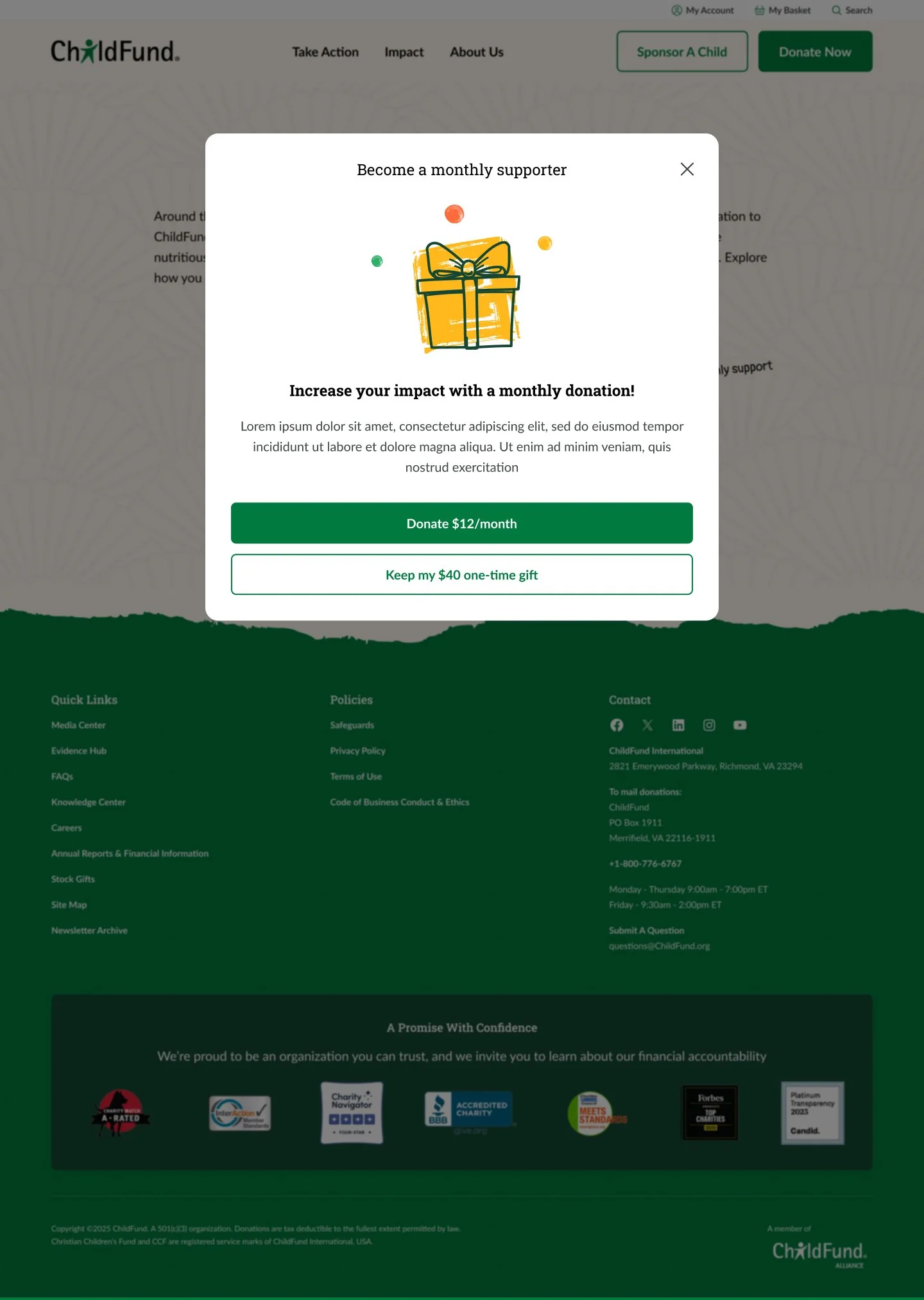
Contribution flows were evaluated through a conversion lens, with emphasis on recurring giving visibility, form scanability, and trust signals at the moment of commitment.
The donor dashboard experience was re-centered around hierarchy, scanability, and clearer “what’s next” cues for returning users.
The overall UX strategy was not about adding more features. It was about structuring content and actions to better match how users think, scan, and decide.
-
The experience was rebuilt on Optimizely 12 CMS and Commerce to replace a less stable Optimizely 11 setup.
Scope included portal/account functionality, donation and sponsorship journeys, service-layer integrations, and modernized authentication/access setup.
Performance improved materially in load testing, with round-two Opti 12 testing showing roughly 65–66% faster mean request times and zero HTTP failures in both 1X and 3X scenarios.
Pre-launch QA and design/UX review covered a broad set of templates and flows, helping the team validate both core content pages and authenticated/commerce experiences before launch.
-
ChildFund.org was rebuilt as a full-site Optimizely 12 modernization focused on donor portal, sponsorship, and commerce experiences.
The project scope included Optimizely CMS + Commerce, portal/account functionality, donation and sponsorship flows, service-layer integrations, and Opti ID / Entra access setup.
Round-two load testing showed significantly better performance than Opti 11, including roughly 65–66% faster overall mean request times and zero HTTP failures in both 1X and 3X tests.
The engagement spanned 62 weeks across discovery, design, and build, reflecting a large-scale transformation rather than a light redesign.
Discovery, design, and build each represented meaningful investment: 14 weeks of discovery, 19 weeks of design, and 29 weeks of build.
Based on prior Verndale experience, a directional benchmark of 5–15% uplift in primary conversions was identified as a reasonable expectation from improved UX, reduced friction, and clearer user flows, while explicitly not positioning that range as a guarantee.